Interview guide
Competency-Based Interview: Definition, How It Works, and FAQ (2026)
A competency-based interview is an interview format where questions are designed to assess specific, pre-defined competencies required for the role. Each q
Quick definition
A competency-based interview is an interview format where questions are designed to assess specific, pre-defined competencies required for the role. Each question targets a particular competency (e.g., leadership, teamwork, problem-solving) and asks the candidate to provide a concrete example from their past experience that demonstrates it. The underlying principle is that past behavior predicts future performance. According to a 2026 SHRM report, 74% of organizations use competency-based interviews, and structured competency frameworks improve hiring accuracy by 45% compared to unstructured interviews.
Direct answer
A competency-based interview is a structured interview format where each question is designed to assess a specific, pre-defined competency required for the role. The employer identifies the key competencies (e.g., leadership, teamwork, problem-solving, communication, adaptability), then crafts questions that ask the candidate to provide concrete examples from their past that demonstrate each competency. The principle is that past behavior predicts future performance. According to a 2026 SHRM report, 74% of organizations use competency-based interviews as part of their hiring process.
Competency-based interviews are highly structured. Each candidate is asked the same or similar questions, and responses are scored against a standardized rubric for each competency, typically on a 1-5 scale. This structure reduces bias and improves predictive validity. A 2026 University of Michigan study found that structured competency-based interviews are 2.5 times more predictive of job performance than unstructured interviews, and a 2026 SHRM report showed they improve hiring accuracy by 45%. Common competencies assessed include leadership, communication, teamwork, problem-solving, adaptability, initiative, and customer focus.
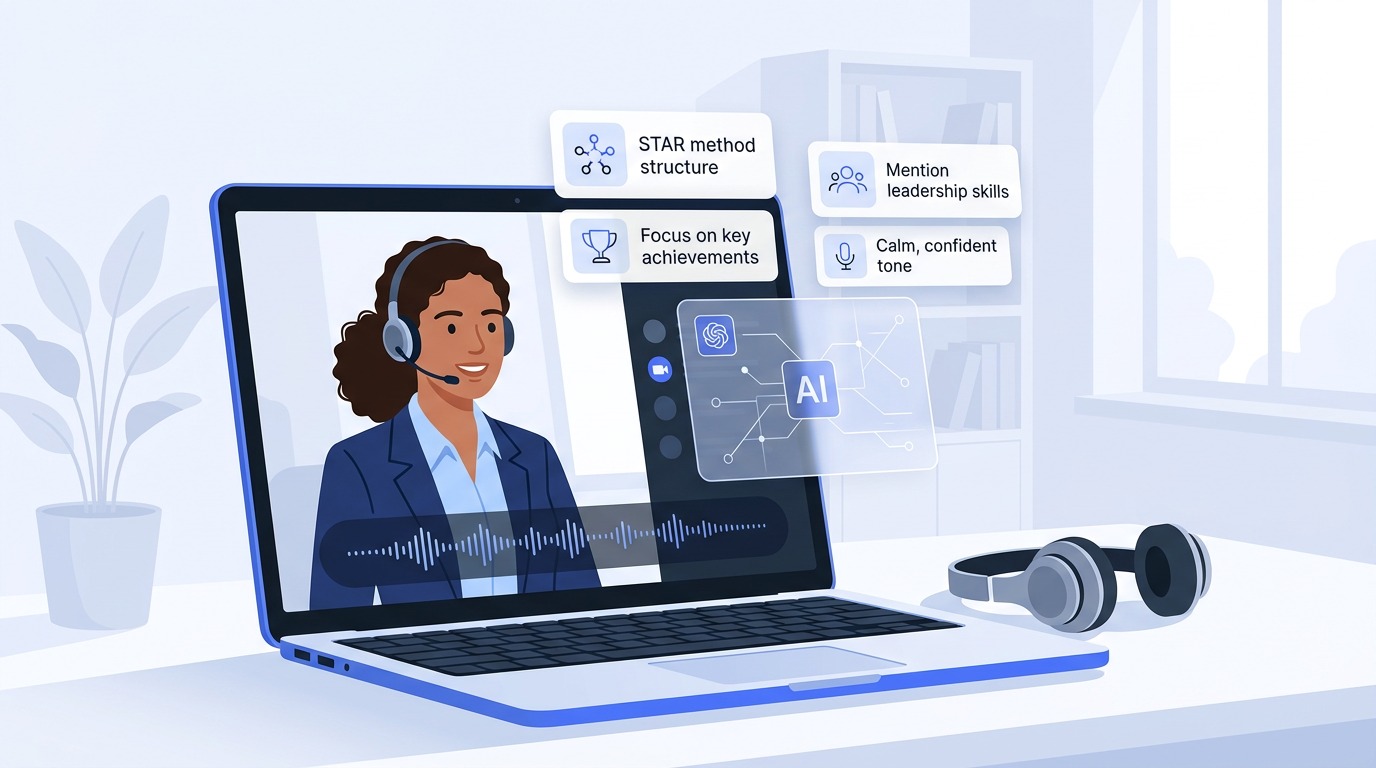
The STAR method (Situation, Task, Action, Result) is the standard framework for answering competency-based questions. Candidates describe a specific situation, their task, the actions they took, and the measurable result. According to a 2026 Glassdoor study, candidates who use STAR-structured answers with quantified results score 34% higher than those who give vague or unstructured responses. Preparation involves identifying the key competencies for the role (often listed in the job description) and preparing 5-7 flexible stories that each demonstrate a different competency.
How it works
Competency identification
The employer identifies 5-8 core competencies required for the role based on the job analysis. These may include leadership, teamwork, problem-solving, communication, and adaptability.
Question design
For each competency, the employer designs a question that asks for a specific past example. Questions typically begin with 'Tell me about a time when...' or 'Describe a situation where...'
Structured scoring
The interviewer scores each competency on a standardized rubric (typically 1-5), using behavioral anchors that describe what a 1, 3, and 5 look like for each competency.
Consistent comparison
All candidates are assessed against the same competencies and rubrics, enabling fair, consistent comparison and reducing individual interviewer bias.
Comparison
| Aspect | Competency-Based | Behavioral Interview | Unstructured Interview |
|---|---|---|---|
| Structure | Highly structured with rubrics | Structured but flexible | Free-form conversation |
| Scoring | Standardized 1-5 rubric per competency | Moderate structure | Subjective, no rubric |
| Predictive validity | 2.5x unstructured | High | Low |
| Used by | 74% of organizations | 68% of Fortune 500 | Small companies, informal |
Frequently asked questions
What is a competency-based interview?
A competency-based interview is a structured format where each question assesses a specific, pre-defined competency (e.g., leadership, teamwork). The candidate provides concrete past examples that demonstrate each competency. According to a 2026 SHRM report, 74% of organizations use competency-based interviews.
How is a competency-based interview different from a behavioral interview?
They are very similar. A competency-based interview is a structured form of behavioral interview where questions are explicitly mapped to pre-defined competencies and scored on a rubric. All competency-based interviews are behavioral, but not all behavioral interviews are competency-based (some are less structured).
What competencies are commonly assessed?
Common competencies include leadership, teamwork, communication, problem-solving, adaptability, initiative, customer focus, and integrity. The specific competencies are usually derived from the job analysis and listed (or implied) in the job description.
How should I prepare for a competency-based interview?
Identify the key competencies from the job description, prepare 5-7 STAR-structured stories that each demonstrate a different competency, and practice delivering them in 2-3 minutes. A 2026 Glassdoor study found that STAR answers with quantified results score 34% higher.
Why are competency-based interviews more accurate than unstructured interviews?
Structured competency-based interviews use standardized questions and scoring rubrics, reducing bias and improving predictive validity. A 2026 University of Michigan study found them 2.5 times more predictive of job performance, and a SHRM report showed they improve hiring accuracy by 45%.
How are competency-based interviews scored?
Each competency is scored on a standardized rubric, typically 1-5, with behavioral anchors describing what each score looks like. The interviewer rates the candidate's evidence for each competency based on the specificity, relevance, and impact of their examples. Scores are compared across candidates for consistency.
Related
Practice with AI
Want to practice these interview questions interactively? Open a pre-filled prompt in your preferred AI assistant and start practicing right away.