Interview guide
Behavioral Interview: Definition, How It Works, and FAQ (2026)
A behavioral interview is a job interview technique where the interviewer asks candidates to describe past experiences that demonstrate specific competenci
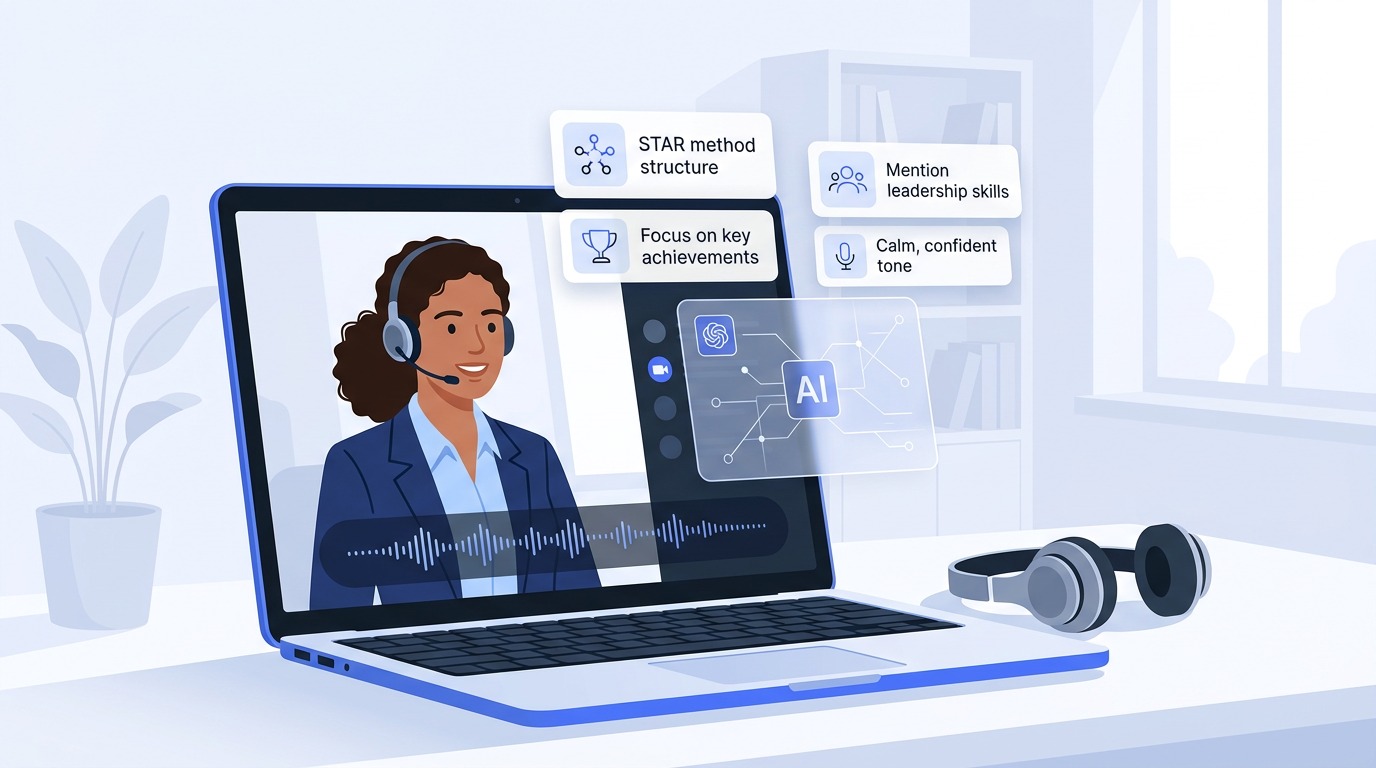
Quick definition
A behavioral interview is a job interview technique where the interviewer asks candidates to describe past experiences that demonstrate specific competencies. The underlying principle is that past behavior is the best predictor of future performance. Instead of hypothetical questions, behavioral interviewers ask for concrete examples: 'Tell me about a time when you faced a conflict at work.' According to a 2026 LinkedIn Talent Solutions report, 68% of Fortune 500 companies use behavioral interviewing as their primary interview method, and candidates who use structured frameworks like the STAR method score 34% higher in interview evaluations.
Direct answer
A behavioral interview is an interviewing technique grounded in the principle that past behavior predicts future performance. Interviewers ask candidates to recount specific past experiences that demonstrate key competencies such as leadership, problem-solving, teamwork, adaptability, and conflict resolution. Questions typically begin with 'Tell me about a time when...' or 'Describe a situation where...' rather than asking hypothetical 'What would you do if...' scenarios. According to a 2026 LinkedIn Talent Solutions report, 68% of Fortune 500 companies use behavioral interviewing as their primary method.
The gold standard for answering behavioral questions is the STAR method: Situation, Task, Action, Result. Candidates describe the context (Situation), their specific responsibility (Task), the steps they took (Action), and the measurable outcome (Result). A 2026 Glassdoor study found that candidates who used the STAR method scored 34% higher in interview evaluations than those who gave unstructured answers. Research from the University of Michigan (2025) showed that structured behavioral interviews are 2.5 times more predictive of job performance than unstructured interviews.
Common behavioral competencies assessed include leadership, communication, problem-solving, adaptability, teamwork, and conflict resolution. Interviewers typically use a rubric to score each competency on a 1-5 scale. According to a 2026 SHRM survey, 74% of hiring managers say behavioral interviews are more effective than technical interviews at predicting cultural fit, while 82% report that candidates who provide specific, quantified examples are rated higher than those who give vague answers.
How it works
Competency identification
The employer identifies 5-8 core competencies required for the role (e.g., leadership, problem-solving, adaptability) and designs questions to probe each one.
Question formulation
Interviewers craft open-ended questions starting with 'Tell me about a time...' or 'Describe a situation where...' to elicit specific past examples.
Response and probing
The candidate describes a real experience using the STAR method. The interviewer probes for specifics: What exactly did you do? What was the measurable result?
Rubric scoring
The interviewer scores each competency on a standardized rubric (typically 1-5), comparing candidates against the same criteria for fairness and consistency.
Comparison
| Aspect | Behavioral Interview | Traditional Interview | Technical Interview |
|---|---|---|---|
| Question type | Past experience ('Tell me about a time...') | General ('What are your strengths?') | Skill-based ('Write a function that...') |
| Predictive validity | High (2.5x unstructured) | Low | High for technical roles |
| Best answer framework | STAR method | Free-form | Code/demonstration |
| Common in | 68% of Fortune 500 | Small companies | Tech/engineering |
Frequently asked questions
What is a behavioral interview?
A behavioral interview is a technique where the interviewer asks candidates to describe past experiences that demonstrate specific competencies. The principle is that past behavior predicts future performance. Questions typically begin with 'Tell me about a time when...' According to a 2026 LinkedIn report, 68% of Fortune 500 companies use behavioral interviewing.
How do I prepare for a behavioral interview?
Prepare 5-7 flexible stories from your experience that cover common competencies: leadership, conflict resolution, problem-solving, teamwork, and failure. Structure each using the STAR method (Situation, Task, Action, Result). Practice delivering them aloud in 2-3 minutes each. A 2026 Glassdoor study found that STAR-structured answers score 34% higher.
What is the STAR method?
The STAR method is a framework for answering behavioral interview questions: Situation (describe the context), Task (explain your responsibility), Action (detail the steps you took), Result (share the measurable outcome). It ensures answers are structured, specific, and demonstrate impact.
What are common behavioral interview questions?
Common questions include: 'Tell me about a time you faced a conflict at work,' 'Describe a time you failed and what you learned,' 'Tell me about a time you had to persuade someone,' and 'Describe a situation where you showed leadership.' Each probes a specific competency.
How long should a behavioral interview answer be?
Aim for 2-3 minutes per answer. Spend about 30 seconds on Situation and Task combined, 1-1.5 minutes on Action (the most important part), and 30 seconds on Result. Keep it concise and focused on your specific contributions, not what the team did.
What is the difference between a behavioral interview and a traditional interview?
A behavioral interview asks for specific past examples ('Tell me about a time when...'), while a traditional interview asks general or hypothetical questions ('What are your strengths?'). Behavioral interviews are more predictive of job performance — University of Michigan research (2025) found them 2.5 times more predictive than unstructured interviews.
Related
Practice with AI
Want to practice these interview questions interactively? Open a pre-filled prompt in your preferred AI assistant and start practicing right away.