Interview guide
HR interview questions and answers: a practical prep guide
Use these question patterns and answer structures to prepare for HR interviews. Includes 18+ sample answers with STAR-method examples for conflict resolution, compliance, DEI, and employee engagement.
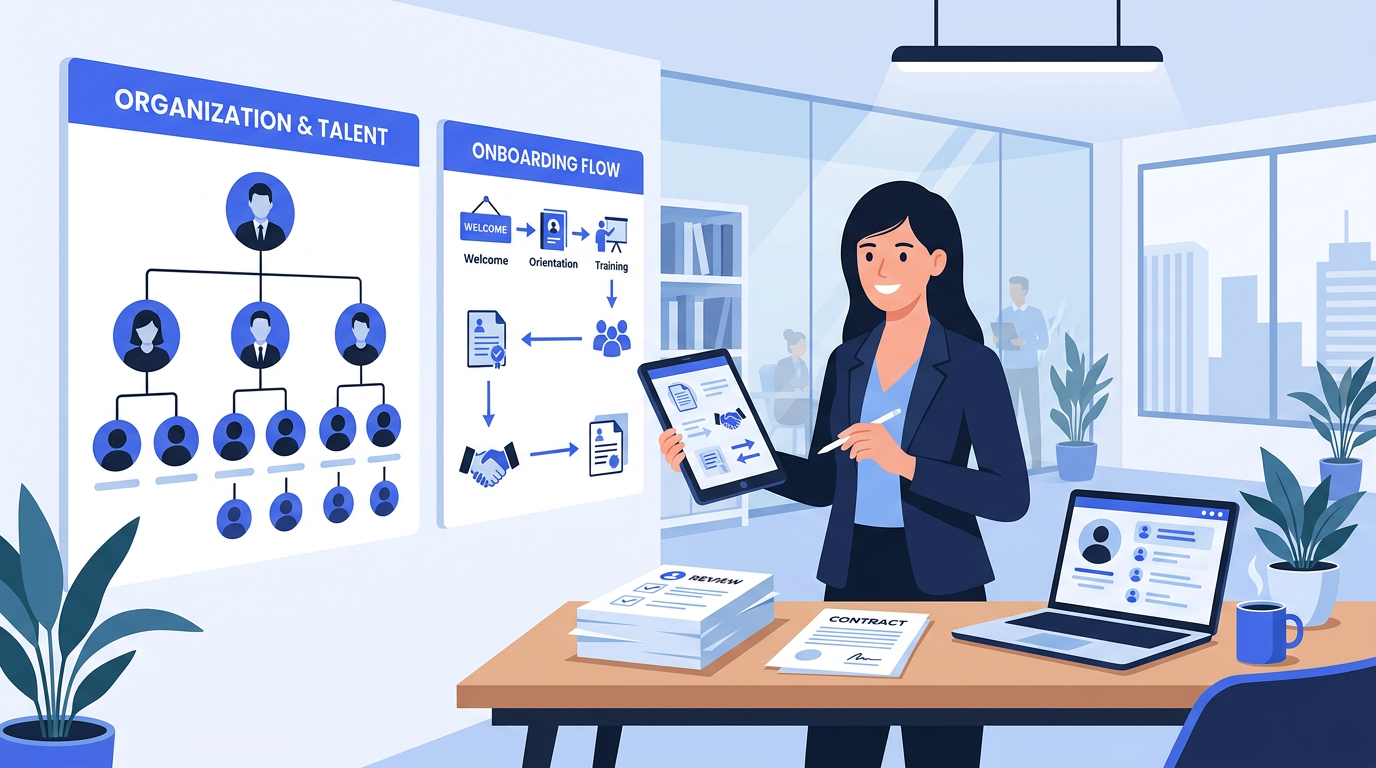
What HR interview panels evaluate
HR interviews test a unique combination of skills: empathy, judgment, legal knowledge, business acumen, and communication. The panel is not just checking whether you know HR policies — they are evaluating whether employees and managers will trust you with their most sensitive concerns. Every answer reveals your ability to balance people advocacy with business pragmatism, and confidentiality with transparency. The best HR professionals are not policy enforcers — they are trusted advisors.
Most HR interviews include three components: a behavioral panel with 6-10 questions, scenario-based questions that test your judgment in real situations, and a discussion with the HR leader or business partner you would support. Some companies also include a case study where you propose an HR solution to a business problem. The behavioral panel is where most candidates succeed or fail.
Common questions and answer frameworks
Below are eighteen of the most frequently asked HR interview questions, each with a framework and a sample answer. Adapt the examples to your own experience. For HR professionals, specificity is critical — use real metrics, real policies, and real outcomes in every answer.
Tell me about yourself.
Structure it as past-present-future in under 90 seconds. 'I have been in HR for six years, most recently as an HR Business Partner at a tech company where I supported 200 employees across three departments and led a performance management redesign that improved review completion from 60 to 95 percent. Before that, I worked in recruitment, which gave me a strong foundation in talent assessment. Now I am looking for a senior HR role where I can partner with leadership on org design and culture initiatives.' This is not your life story — it is a structured pitch that connects your experience to the role.
How do you handle conflict between an employee and their manager?
Show neutrality and process. 'I start by speaking to each party separately to understand their perspectives without judgment. Then I facilitate a joint conversation where each person states their concern and what they need. I do not take sides — I help them find common ground and agree on specific next steps. I document the conversation and follow up within two weeks. If the conflict involves policy violations or harassment, I follow the company protocol and involve legal. My role is to facilitate resolution, not impose it.'
Tell me about a time you had to deliver a difficult message to leadership.
Use STAR. Situation: Our employee engagement survey showed a 30 percent dissatisfaction rate with management communication. Task: I needed to present this to the executive team without causing defensiveness. Action: I framed the data as an opportunity, not a criticism. I paired the negative results with specific recommendations: a monthly all-hands meeting, manager training on feedback, and a communication audit. I also shared qualitative quotes to humanize the data. Result: The leadership team approved all three recommendations, and the next survey showed dissatisfaction dropped to 12 percent. I learned that data without recommendations creates anxiety — data with solutions creates action.'
How do you approach diversity, equity, and inclusion in your work?
Show concrete actions, not just belief statements. 'I believe DEI is a business strategy, not an HR initiative. In my last role, I audited our hiring process and found that 70 percent of candidates were referred by existing employees, which limited diversity. I implemented a structured referral program that required diverse candidate slates, added blind resume screening for the first round, and partnered with three professional associations that serve underrepresented groups. Within a year, our new hire diversity increased by 40 percent. I also facilitated quarterly inclusion workshops for managers. DEI is not a checkbox — it is a continuous practice built into every HR process.'
How do you handle an employee who is underperforming?
Show a structured, supportive approach. 'I start with a conversation, not a warning. I ask: is the work unclear, is the workload unrealistic, is there a skill gap, or is something happening outside of work? If it is clarity, I work with the manager to set clearer expectations. If it is a skill gap, I arrange training. If it is workload, I help prioritize. If it is performance, I create a Performance Improvement Plan with specific, measurable goals and a timeline. I document everything and check in weekly. The goal is to help the employee succeed, not to build a case for termination — but if improvement does not happen, the documentation is there.'
What is your experience with HRIS and payroll systems?
List with specifics. 'I have administered Workday for three years, managing employee records, performance reviews, onboarding workflows, and reporting. I also have experience with BambooHR for a smaller organization, Gusto for payroll, and Lever for applicant tracking. I am comfortable building custom reports, creating approval workflows, and managing system integrations. I learn new systems quickly — the logic is similar across platforms. I also believe that the system should serve the process, not the other way around — I design the HR process first and then configure the system to support it.'
How do you ensure compliance with employment law?
Show proactive, not reactive, compliance. 'I stay current through my SHRM membership and quarterly legal updates from our employment counsel. I audit our practices annually — job postings, interview processes, pay equity, termination documentation, and leave policies. I also train managers on compliance basics so they do not inadvertently create liability. When a compliance issue arises, I address it immediately and document the resolution. Compliance is not a once-a-year audit — it is built into every HR decision. The cost of non-compliance is always higher than the cost of prevention.'
Describe a time you had to manage a reduction in force.
Use STAR. Situation: The company needed to reduce headcount by 15 percent due to a funding shortfall. Task: I needed to manage the process with dignity and legal compliance. Action: I worked with leadership to define selection criteria based on role redundancy and performance, not personal factors. I prepared severance packages, outplacement services, and a communication plan. I trained managers on how to deliver the news with empathy. I also set up a support line for remaining employees. Result: We completed the process in one week with no legal disputes, and the departing employees gave positive feedback on the respect shown. I learned that how you treat people on their worst day defines the culture for everyone who stays.'
How do you measure the effectiveness of HR programs?
Tie metrics to business outcomes. 'I measure HR programs by their business impact, not HR activity. For recruitment, I track time-to-fill, quality-of-hire (90-day performance rating), and retention rate at 6 months. For engagement programs, I track engagement scores, voluntary turnover, and manager effectiveness ratings. For learning and development, I track skill improvement, promotion rate, and employee feedback. For DEI, I track representation, hiring diversity, and inclusion survey scores. I present these metrics to leadership quarterly, not annually, so we can adjust programs that are not working before they waste a full year of budget.'
How do you handle a manager who is not following HR policies?
Show firmness with diplomacy. 'I start with a private conversation, not an email. I explain the policy, why it matters, and the risk of non-compliance — both for the company and for the manager personally. Most non-compliance comes from not understanding the why, not from defiance. If the manager continues to ignore the policy after the conversation, I escalate to their manager and document the conversation. I never let a policy violation slide because it undermines the entire HR function. But I also never lead with a hammer — I lead with education and escalate only when education fails.'
What is your approach to employee engagement?
Show a strategic, not event-planning, approach. 'Employee engagement is not pizza parties and ping-pong tables. It is meaningful work, fair compensation, growth opportunities, and being heard. I measure engagement through surveys, stay interviews, and exit interviews. I address the top three issues each quarter with specific initiatives. In my last role, the number one engagement driver was career growth — so I built a mentorship program and a transparent promotion criteria document. Engagement scores rose 18 percent in six months. Engagement is a leadership responsibility — HR provides the data and the tools, but managers create the daily experience.'
How do you handle compensation questions from employees?
Show transparency and process. 'I believe in pay transparency within the limits of company policy. When an employee asks about their compensation, I explain the pay band for their role, how their position was determined, and what they need to do to move to the next band. I never discuss other employees pay. If the employee believes they are underpaid, I initiate a pay equity review with data — market benchmarks, internal equity, and performance. If the data shows they are underpaid, I advocate for an adjustment. If it does not, I explain the data. Compensation conversations should be data-driven, not emotional.'
Tell me about a time you influenced a business decision as an HR leader.
Use STAR. Situation: The company was planning to require all employees back in the office five days a week. Task: I believed this would cause significant attrition based on exit interview data and engagement surveys. Action: I compiled data showing that 40 percent of employees cited flexibility as their top reason for staying, that competitors were offering hybrid models, and that projected attrition would cost $800K in replacement costs. I proposed a hybrid model with 3 days in office and clear performance expectations. Result: Leadership approved the hybrid model. Attrition did not spike, and engagement scores improved. I learned that HR influence comes from data, not from opinion.'
How do you handle confidential information?
Show clear boundaries. 'I treat all employee information as confidential by default. I share information only on a need-to-know basis — with managers about their direct reports, with legal when required, and with leadership in aggregate, not individual, form. I never discuss employee situations in casual conversation, even with other HR team members who are not involved. I also maintain secure documentation — no sensitive information in shared drives or email chains. Confidentiality is the foundation of trust in HR, and once it is broken, it cannot be rebuilt.'
What is your experience with remote workforce management?
Be specific about practices. 'I have managed HR for fully remote and hybrid teams of up to 200 employees. I implemented virtual onboarding with a 30-day check-in cadence, built a remote-first performance management process focused on outcomes rather than hours, and created a communication charter that defines response time expectations. I also track remote-specific engagement metrics — isolation signals, meeting fatigue, and connection to company culture. Remote HR requires more deliberate communication, not less. You cannot rely on hallway conversations to build culture.'
How do you stay current with HR trends and best practices?
Show ongoing learning. 'I maintain my SHRM-SCP certification with 60-plus CPE credits per year. I subscribe to Harvard Business Review and read the HR section weekly. I am part of a peer network of 15 HR leaders who meet monthly to discuss challenges. I attend the SHRM annual conference and one specialized conference per year — last year it was the Workhuman Forum on recognition. I also test new tools personally before recommending them — I have trial accounts with three HR tech platforms. Staying current is not about knowing every trend — it is about knowing which trends matter for your organization.'
How do you handle a harassment complaint?
Show process and urgency. 'I take every complaint seriously and act immediately. First, I ensure the complainant is safe and has access to support resources. Second, I document the complaint in detail. Third, I initiate an investigation — either internally or with an external investigator for sensitive cases. Fourth, I take interim measures to separate the parties if needed. Fifth, I report findings to leadership and recommend action. Throughout the process, I maintain confidentiality and communicate with the complainant about next steps. The worst thing an HR leader can do with a harassment complaint is delay or dismiss it.'
What would you do in your first 90 days in this role?
Show a listening-first approach. 'In the first 30 days, I would listen — meet with every leader, key managers, and a sample of employees. I would review existing HR data — turnover, engagement scores, performance ratings, and pay equity. In days 31-60, I would identify the top three priorities based on what I learned and present them to leadership with a plan. In days 61-90, I would execute on the first priority and build momentum. I do not make changes in the first 30 days — I build trust first, then act with data. An HR leader who changes everything in week one destroys trust faster than they build it.'
Why should we hire you for this HR role?
Connect your experience to their needs. Example: 'You should hire me because I combine strategic HR thinking with hands-on execution. In my last role, I reduced voluntary turnover by 25 percent, launched a DEI program that increased diverse hiring by 40 percent, and built a performance management process that leadership actually trusts. I do not just run HR processes — I partner with the business to solve people problems that affect the bottom line. I am not an HR administrator — I am a business partner who happens to specialize in people.'
The STAR method for HR behavioral questions
For behavioral questions, use the STAR method. In HR interviews, your stories must demonstrate both people skills and business impact:
- Situation — Set the scene: what was the people challenge, who was involved, what was at stake.
- Task — What was your responsibility? What was the HR objective?
- Action — What did you do? Describe the HR process, the conversations, and the decisions.
- Result — What happened? Quantify it: turnover reduced, engagement improved, compliance achieved, conflict resolved.
Keep each STAR answer under 90 seconds. The best HR professionals are concise — if you cannot summarize a complex employee situation in 90 seconds, you will struggle to advise leadership who have 5 minutes. Practice with a timer.
Common mistakes to avoid
- Talking about policy without people — HR is about people first, process second. Show empathy in every answer.
- Not knowing your HR metrics — If you cannot state your turnover rate or engagement score, you are not ready.
- Saying you love helping people without evidence — Every HR candidate says this. Back it with a specific story.
- Not understanding the business — HR leaders who only know HR, not the business, are not strategic partners.
- Being too cautious in scenario questions — Scenario questions test judgment. Give a clear recommendation, not it depends.
- Not asking about the HR function maturity — If you do not ask about the HR team structure and challenges, you signal you do not understand the role.
Step-by-step interview preparation method
Research the company and HR function
Understand the company size, industry, HR team structure, and the specific HR role. Check if they have a CHRO or VP of HR, whether HR is strategic or administrative, and what HR systems they use.
Prepare your HR stories
Have 5-7 STAR stories: a conflict resolution, a leadership influence moment, a DEI initiative, a compliance challenge, an engagement win, a difficult termination, and a process improvement. Each should include measurable results.
Know HR metrics and employment law
Be ready to discuss turnover rates, engagement scores, time-to-fill, pay equity, and relevant employment laws (FMLA, ADA, FLSA, Title VII). Vague answers are a red flag for an HR professional.
Practice 15 key questions aloud
Use the questions in this guide. Record yourself and listen for empathy, structure, and specificity. Practice with an AI interview tool for feedback on your delivery.
Prepare for scenario questions
HR interviews often include scenarios: an employee alleges harassment, a manager asks you to fire someone without cause, two employees are in a conflict. Be ready to walk through your response step by step.
Prepare questions about the HR function
Ask about the HR team size, the biggest people challenge, how HR is viewed by leadership, the budget for L&D and DEI, and what success looks like in the first 90 days.
Questions to ask the interview panel
- How is the HR function viewed by leadership — as a strategic partner or an administrative function?
- What is the biggest people challenge the company is facing right now?
- What HR systems does the team use, and are there planned upgrades?
- How does HR partner with department managers on a day-to-day basis?
- What does success look like for this role in the first 90 days?
- What is the budget for L&D, DEI, and employee engagement initiatives?
After the interview: follow-up and reflection
Within 24 hours, send a concise thank-you email. Reference one specific topic from the interview — a scenario they asked, a people challenge they mentioned, or something about their HR team. In HR, this follow-up demonstrates the communication skill the role requires.
If you do not get the job, ask for feedback. HR hiring decisions often come down to judgment and cultural fit. The feedback from a rejection is valuable data for your next interview.
Practice with AI
HR interview preparation is most effective when you practice aloud, especially the scenario questions. Read the job description, identify the HR challenges most relevant, and rehearse your stories. Record yourself and listen for empathy, structure, and specificity. Uhired AI can generate HR-specific interview questions from your resume and the job description, simulate the scenario exercise, and help you refine your answers until they are clear, compassionate, and business-focused.
You can also use AI to simulate the scenario exercise. Give the AI a scenario — an employee alleges harassment, a manager wants to fire someone without documentation — and practice walking through your response in real time. This builds the judgment and composure you need when the real panel presents a sensitive situation and asks what you would do.
Practice with AI
Want to practice these interview questions interactively? Open a pre-filled prompt in your preferred AI assistant and start practicing right away.