Interview guide
Body Language: Definition, How It Works, and FAQ (2026)
Body language in interviews refers to the non-verbal signals a candidate sends through posture, eye contact, facial expressions, hand gestures, and spatial
Quick definition
Body language in interviews refers to the non-verbal signals a candidate sends through posture, eye contact, facial expressions, hand gestures, and spatial positioning. Research shows that non-verbal communication accounts for 55-70% of the overall impression a candidate makes during an in-person or video interview. According to a 2026 UCLA study, interviewers form a first impression within 7 seconds of meeting a candidate, and candidates with open, confident body language are rated 33% higher on average than those with closed or nervous postures.
Direct answer
Body language in interviews refers to the non-verbal signals a candidate conveys through posture, eye contact, facial expressions, hand gestures, and spatial positioning. Research consistently shows that non-verbal communication accounts for 55-70% of the overall impression a candidate makes during an in-person or video interview, with the remaining 35-45% split between tone of voice (38%) and verbal content (7%), according to the Mehrabian model. According to a 2026 UCLA study, interviewers form a first impression within 7 seconds of meeting a candidate based primarily on non-verbal cues.
Key positive body language signals include: maintaining eye contact (60-70% of the time, not staring), sitting up straight with shoulders back, leaning slightly forward to show engagement, nodding to show active listening, using open hand gestures to illustrate points, and smiling genuinely. Negative signals to avoid include: crossed arms (defensiveness), fidgeting (nervousness), avoiding eye contact (evasion), slouching (disinterest), and touching the face or neck (anxiety). A 2026 Glassdoor study found that candidates with open, confident body language are rated 33% higher than those with closed or nervous postures.
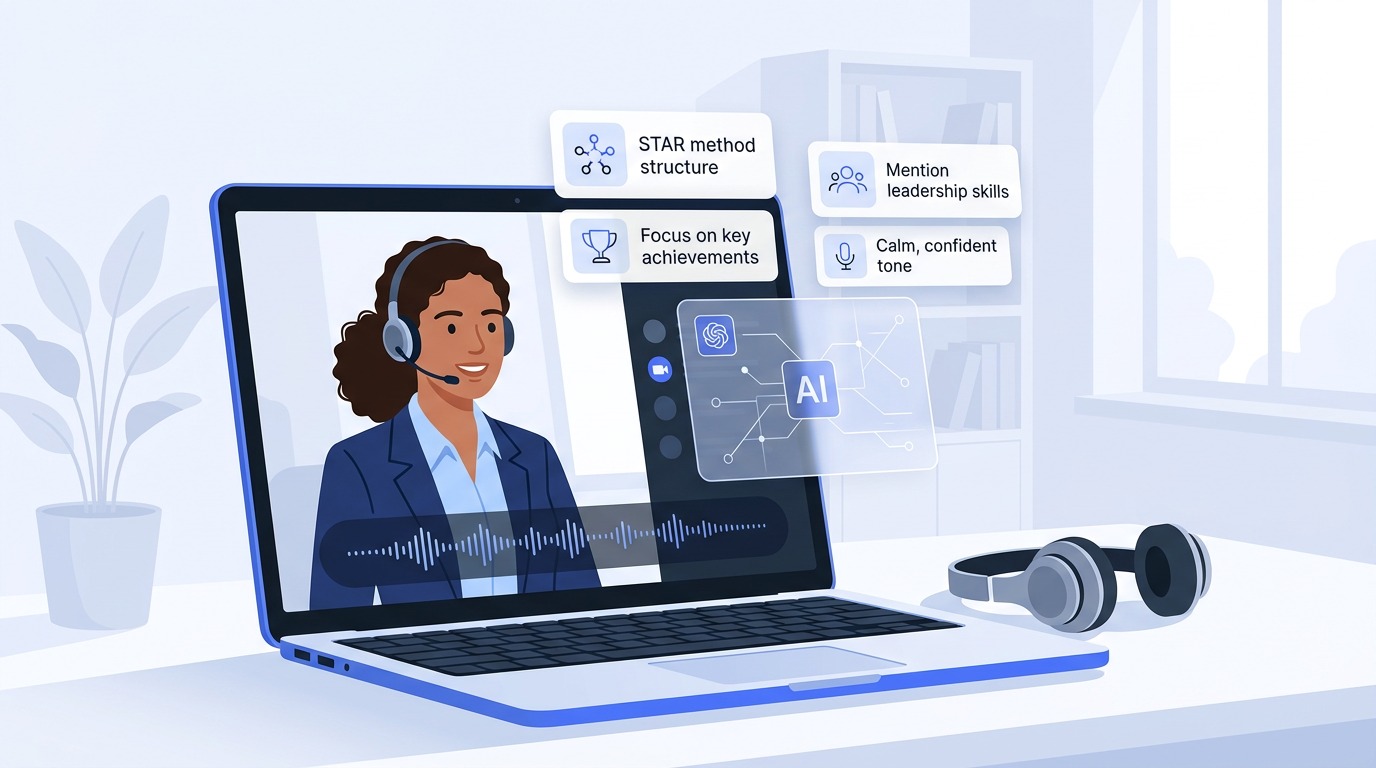
In video interviews, body language requires different attention. Candidates should position the camera at eye level, look at the camera (not the screen) when speaking, ensure good lighting, and minimize visible distractions in the background. A 2026 LinkedIn report found that 52% of interviewers cite poor eye contact with the camera as the most common body language mistake in video interviews. Preparation involves recording yourself in a mock interview and reviewing your body language, or using AI tools that analyze posture, eye contact, and facial expressions to provide feedback.
How it works
First impression
Interviewers form an initial impression within 7 seconds based on posture, facial expression, and handshake (in person) or camera positioning (video). This anchors subsequent evaluations.
During the interview
Throughout the interview, maintain eye contact (60-70%), use open posture, nod to show engagement, and use natural hand gestures. Avoid fidgeting, crossing arms, or touching your face.
Video interview adjustments
Position the camera at eye level, look at the camera lens when speaking (not the screen), ensure good lighting, and keep the background clean. These adjustments compensate for the loss of in-person presence.
Self-assessment
Record yourself in a mock interview and review your body language, or use AI analysis tools that score posture, eye contact, and facial expressions. Identify and correct negative habits.
Comparison
| Signal | Positive Meaning | Negative Meaning | Impact |
|---|---|---|---|
| Eye contact | Confidence, honesty (60-70%) | Evasion, dishonesty | High |
| Posture | Engagement, energy | Disinterest, low energy | High |
| Hand gestures | Open, expressive | Closed, fidgeting | Medium |
| Facial expression | Warmth, approachability | Nervousness, disinterest | High |
Frequently asked questions
How important is body language in an interview?
Very important. Research shows non-verbal communication accounts for 55-70% of the impression you make, with tone of voice at 38% and verbal content at 7% (Mehrabian model). A 2026 UCLA study found that interviewers form a first impression within 7 seconds, primarily based on body language.
What are the best body language tips for an interview?
Maintain eye contact (60-70% of the time), sit up straight with shoulders back, lean slightly forward to show engagement, nod to show active listening, use open hand gestures, and smile genuinely. A 2026 Glassdoor study found that candidates with confident body language are rated 33% higher.
What body language should I avoid in an interview?
Avoid crossing your arms (defensiveness), fidgeting (nervousness), avoiding eye contact (evasion), slouching (disinterest), and touching your face or neck (anxiety). These negative signals can undermine an otherwise strong verbal performance.
How do I handle body language in a video interview?
Position the camera at eye level, look at the camera lens (not the screen) when speaking, ensure good lighting, and keep the background clean. A 2026 LinkedIn report found that 52% of interviewers cite poor camera eye contact as the most common body language mistake in video interviews.
Can body language be practiced?
Yes. Record yourself in a mock interview and review your posture, eye contact, and gestures. AI tools can analyze your body language and provide feedback. Practice until positive habits become natural. The goal is authentic, confident body language, not rehearsed movements.
How quickly do interviewers form an impression?
Within 7 seconds, according to a 2026 UCLA study. Interviewers form an initial impression based on posture, facial expression, and overall presence before you even speak. This first impression anchors their subsequent evaluation, making the first few seconds critical.
Related
Practice with AI
Want to practice these interview questions interactively? Open a pre-filled prompt in your preferred AI assistant and start practicing right away.