Interview guide
Asynchronous Interview: Definition, How It Works, and FAQ (2026)
An asynchronous interview is an interview format where candidates record their responses to pre-set questions on their own time, without a live interviewer
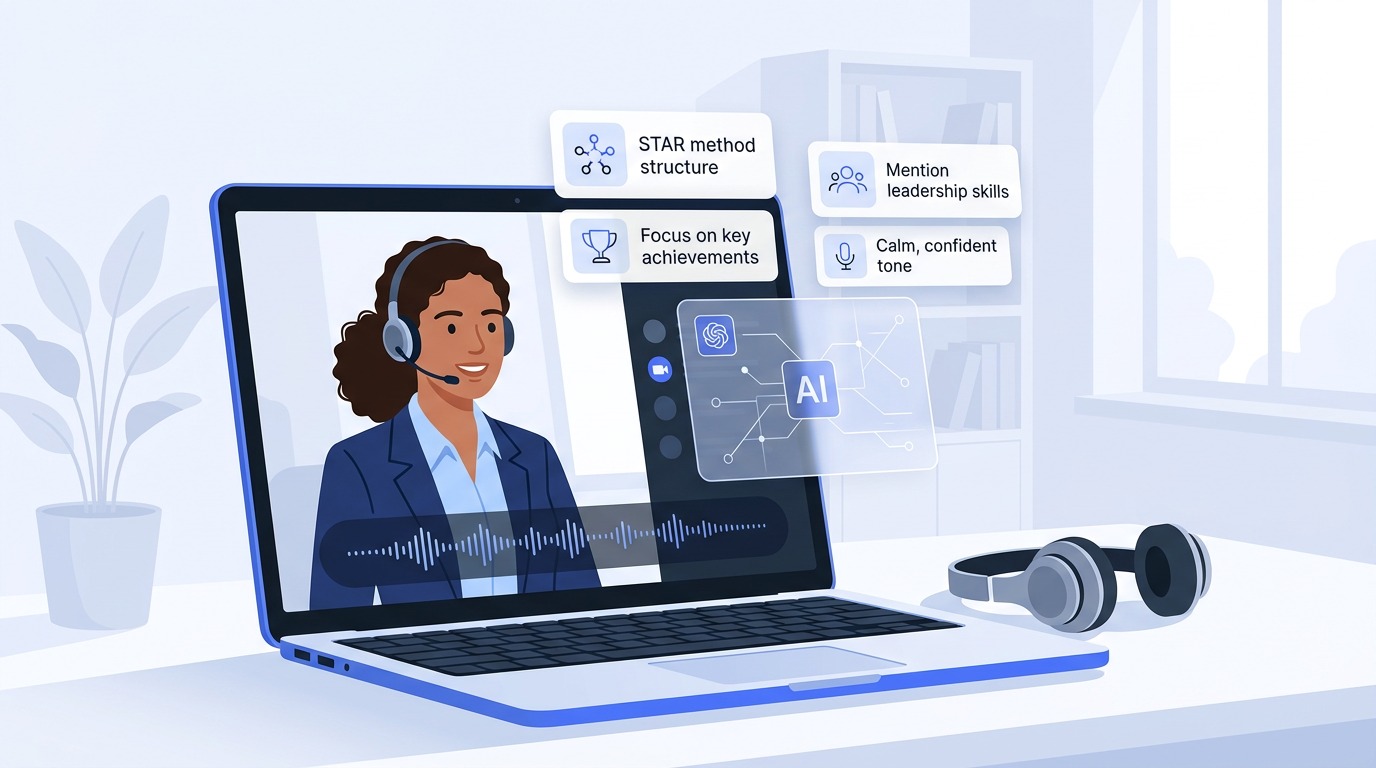
Quick definition
An asynchronous interview is an interview format where candidates record their responses to pre-set questions on their own time, without a live interviewer present. Also known as on-demand or one-way interviews, they are typically conducted via video platforms like HireVue or Spark Hire. Candidates read or hear a question, have a set preparation time, and record their answer within a time limit. According to a 2026 SHRM report, 49% of companies use asynchronous interviews for initial screening, and the format has grown 340% since 2020.
Direct answer
An asynchronous interview is an interview format where candidates record their responses to pre-set questions on their own schedule, without a live interviewer present. Also called on-demand or one-way interviews, they are typically conducted via video platforms like HireVue, Spark Hire, or VidCruiter. The candidate reads or hears a question, has a set preparation time (usually 30 seconds), and then records their answer within a time limit (usually 1-3 minutes). According to a 2026 SHRM report, 49% of companies use asynchronous interviews for initial screening, and adoption has grown 340% since 2020.
Asynchronous interviews are used primarily for high-volume screening, allowing employers to evaluate many candidates efficiently without scheduling individual calls. The format presents unique challenges for candidates: there is no feedback loop, no opportunity to clarify questions or follow up, and no ability to read the interviewer's reactions to adjust your approach. A 2026 LinkedIn study found that 43% of candidates find asynchronous interviews more stressful than live interviews because of the lack of interaction and the pressure of recording. However, the format also offers benefits: candidates can complete it on their own schedule and in a comfortable environment.
Some platforms incorporate AI analysis of recorded responses, scoring candidates on language patterns, speech characteristics, and sometimes facial expressions (though facial analysis has been discontinued by major platforms like HireVue due to bias concerns). A 2026 MIT study found that AI-scored asynchronous interviews have a 72% correlation with human scores for communication competencies but only 41% for technical competencies. Preparation involves practicing recording yourself, testing lighting and audio, keeping answers concise and structured (since there is no follow-up opportunity), and treating each question as a self-contained mini-presentation.
How it works
Invitation
The candidate receives an email with a link and deadline (typically 3-5 days). They can complete the interview on their own schedule using a webcam or mobile device.
Question delivery
The platform presents questions in text or video format. The candidate has a set preparation time (usually 30 seconds) before recording begins.
Response recording
The candidate records their answer within a time limit (usually 1-3 minutes). Some platforms allow re-recording; others do not. Each answer is self-contained with no follow-up.
Review and scoring
The recorded responses are reviewed by human recruiters and/or scored by AI for language patterns, speech characteristics, and competency indicators. Top candidates advance to live interviews.
Comparison
| Aspect | Asynchronous Interview | Live Video Interview | Phone Interview |
|---|---|---|---|
| Interviewer | None (pre-set questions) | Live interviewer | Live interviewer |
| Interaction | None (one-way) | Two-way (live) | Two-way (audio only) |
| Schedule | On your time | Scheduled | Scheduled |
| Re-record | Sometimes allowed | Not applicable | Not applicable |
Frequently asked questions
What is an asynchronous interview?
An asynchronous interview is a format where candidates record responses to pre-set questions on their own time, without a live interviewer. It is also called an on-demand or one-way interview. According to a 2026 SHRM report, 49% of companies use asynchronous interviews, and adoption has grown 340% since 2020.
How is an asynchronous interview different from a live interview?
In an asynchronous interview, you record responses to pre-set questions without a live interviewer — there is no interaction, no follow-up, and no feedback. In a live interview, a real interviewer asks questions and you can interact. Asynchronous interviews are used for high-volume screening.
Can I re-record my answers in an asynchronous interview?
It depends on the platform and employer settings. Some allow unlimited re-records, some allow one re-record per question, and some do not allow re-recording. Check the instructions before starting. Always practice beforehand.
How should I prepare for an asynchronous interview?
Practice recording yourself answering common questions within time limits. Test lighting, audio, and background. Keep answers concise and structured since there is no follow-up. A 2026 Glassdoor study found that practice improves asynchronous interview scores by 28%.
Are asynchronous interviews fair?
There are concerns. AI analysis of recorded responses has 72% correlation with human scores for communication but only 41% for technical competencies (MIT, 2026). Facial analysis has been discontinued by major platforms due to bias concerns. However, the format is efficient for high-volume screening when used alongside other methods.
What platforms are used for asynchronous interviews?
Common platforms include HireVue, Spark Hire, VidCruiter, InterviewStream, and Modern Hire. These platforms present pre-set questions, provide preparation time, record responses, and may include AI analysis features for scoring candidates.
Related
Practice with AI
Want to practice these interview questions interactively? Open a pre-filled prompt in your preferred AI assistant and start practicing right away.