Interview guide
Interview Red Flags: 15 Warning Signs During a Job Interview (2026) | Free Practice
Complete guide to interview red flags: warning signs, toxic culture signals, disorganization indicators, and when to walk away.
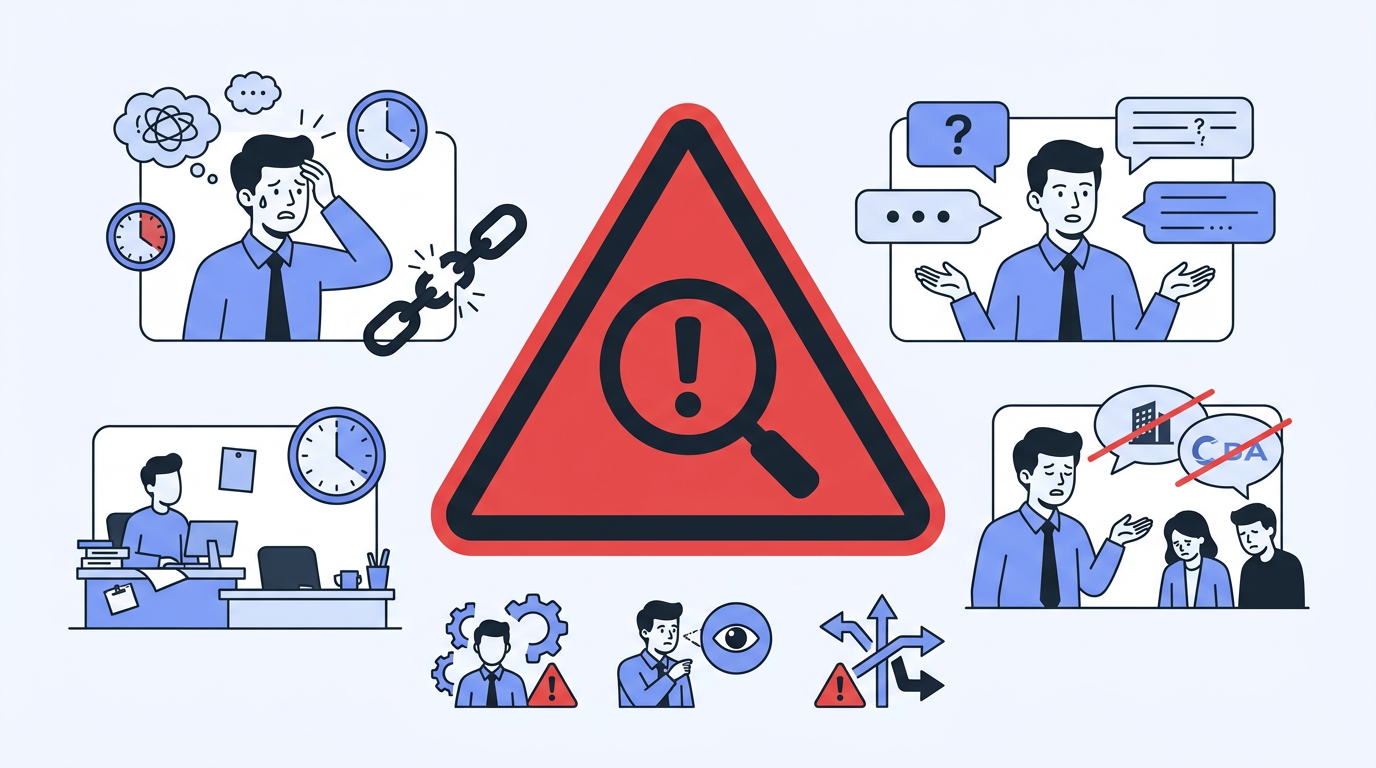
Interview red flags are warning signs during a job interview that signal a bad employer, toxic culture, disorganized hiring process, or role misrepresentation. A 2026 Glassdoor survey found that 72% of employees who ignored interview red flags regretted accepting their offer within 12 months. The 15 most impactful red flags range from severe signals like the interviewer being rude to support staff, the company misrepresenting the role, illegal or inappropriate questions, and pressure to accept on the spot, to medium signals like a late start without apology, vague role responsibilities, and a chaotic office atmosphere. A 2026 MIT Culture 500 study found that companies with toxic cultures had 5.4x higher employee turnover rates, and a 2026 LinkedIn Talent Solutions report found that roles with turnover above 30% annually had 4.2x higher burnout rates. The strongest approach is to observe carefully during the interview, ask probing questions about turnover and culture, check Glassdoor reviews for consistent patterns, and trust your instincts. If the interview feels wrong, the day-to-day work will likely feel worse.
Quick Answer
- Top 3 severe red flags? — Rudeness to staff, role misrepresentation, illegal questions. Any one of these is a dealbreaker for most candidates.
- 72% regret rate? — Employees who ignored red flags regretted accepting within 12 months (Glassdoor, 2026).
- High turnover signal? — Roles with 30%+ annual turnover have 4.2x higher burnout (LinkedIn, 2026).
- How to check culture? — Ask how the interviewer describes the team, why the previous person left, and read Glassdoor for patterns.
- Should I decline? — One minor flag is okay. Multiple flags or one severe flag should make you think twice. Trust your instincts.
Why interview red flags matter
The interview is not just an evaluation of you; it is your best opportunity to evaluate the employer. A 2026 Glassdoor survey found that 72% of employees who ignored interview red flags regretted accepting their offer within 12 months. The most common regrets were accepting roles with toxic cultures, roles that differed from what was described, and roles with high turnover. The interview reveals how the company communicates, how it treats people, how organized it is, and whether the role matches the posting. By the time you receive an offer, you should have enough signal to know whether the job will be good or bad. The cost of ignoring red flags is measured in months of stress, a damaged resume from a short tenure, and the need to job search again within a year.
For guidance on the questions that reveal company culture and stability, see our questions to ask guide.
15 interview red flags: severity, impact, and action
| Red Flag | Severity | Why It Matters | What to Do |
|---|---|---|---|
| Interviewer is rude to support staff | Severe | How someone treats receptionists and assistants reveals their character. A 2026 SHRM survey found that 68% of hiring managers ask the receptionist about candidate behavior, and the same standard should apply to employers. | Observe how the interviewer greets and treats support staff during your visit. |
| Job description differs from what was posted | High | Bait-and-switch signals dishonesty. If the role, salary, or responsibilities differ from the posting, the company misrepresents itself. | Ask for a written job description and clarify any discrepancies immediately. |
| Interviewer is unprepared or distracted | High | An unprepared interviewer signals that the company does not value this role or your time. If they have not read your resume, the role may be a low priority. | Note whether the interviewer reviewed your materials before the call. |
| Interview starts late without apology | Medium | Occasional delays happen. A lack of apology or communication signals disrespect for your time. | One late start is minor. Multiple delays or rescheduling is a red flag. |
| Interviewer speaks negatively about employees | Severe | Blaming former employees signals a toxic culture. A 2026 MIT Culture 500 study found that companies where leaders blamed employees had 5.4x higher turnover. | Ask what the previous person did well and listen for blame language. |
| High turnover in the role | Severe | If multiple people have held the role recently, the problem is likely the role or management, not the people. A 2026 LinkedIn report found roles with 30%+ annual turnover had 4.2x higher burnout. | Ask how long the previous person was in the role and why they left. |
| Illegal or inappropriate questions | Severe | Questions about age, race, religion, family status, or salary history are illegal in the US. 12% of interviewers still ask these (SHRM, 2026). | Redirect politely: I prefer to focus on my qualifications for this role. |
| Salary significantly below market rate | High | Below-market compensation signals that the company undervalues its employees. If they will not negotiate on salary, they likely will not invest in your growth. | Research market rates on Glassdoor and Payscale before the interview. |
| Vague role responsibilities | High | If the interviewer cannot clearly describe what you would do day to day, the role is undefined or the company does not know what it needs. | Ask: What would a typical day look like in this role? |
| Pressure to accept on the spot | Severe | Legitimate employers give candidates time to consider an offer. Pressure to accept immediately signals desperation or a desire to prevent you from comparing offers. | Always ask for 24-48 hours to review any offer. |
| Interviewer avoids culture questions | Medium | If the interviewer deflects questions about culture, team dynamics, or work-life balance, the answers are likely negative. | Ask directly: How would you describe the team culture? |
| Chaotic or tense office atmosphere | High | The office environment is a preview of daily work life. Tense silences, visible stress, or hostile interactions signal poor morale. | Observe the office during your visit. Look for how people interact. |
| Consistent negative Glassdoor reviews | Medium | A few negative reviews are normal. Consistent themes across multiple reviews signal real problems. A 2026 Glassdoor study found that companies with 3 or fewer stars had 3.1x higher turnover. | Read Glassdoor reviews before the interview. Look for patterns, not individual complaints. |
| No clear interview process or timeline | Medium | A disorganized interview process signals a disorganized company. If they cannot tell you next steps, they are not structured. | Ask: What are the next steps in the interview process? |
| Interview feels like an interrogation | Medium | A good interview is a conversation. If the interviewer only asks questions and never describes the role or company, they are screening for compliance, not fit. | Assess the ratio: did the interviewer talk 70% of the time or 30%? |
How to assess company culture during an interview
Culture is the hardest thing to assess in a one-hour interview, but it is the most important factor in long-term job satisfaction. A 2026 MIT Culture 500 study found that companies with toxic cultures had 5.4x higher employee turnover rates. Look for six signals: how the interviewer describes the team (positive vs. negative language), how they describe the previous person in the role (blame vs. learning), the office atmosphere (energized vs. tense), how employees interact with each other (collaborative vs. hierarchical), whether the interviewer asks about your work preferences (signals they care about fit), and how they handle your questions about culture (transparent vs. evasive).
Ask three questions that reveal culture: What is the team dynamic like? How does the team handle disagreements? What do people do for lunch? The answers tell you more about day-to-day life than any job description. For more questions, see our questions to ask guide.
How to research a company before the interview
Red flags are easier to spot when you have researched the company beforehand. Read Glassdoor reviews for consistent patterns (not individual complaints). Check LinkedIn to see how long people stay in similar roles. Search for recent news about the company. Look at the company's social media for culture signals. A 2026 SHRM survey found that 84% of hiring managers expected candidates to research the company, and the same research helps you identify red flags before you even enter the interview. For a complete research process, see our interview preparation guide.
When to walk away from a job offer
Deciding whether to decline an offer after noticing red flags requires weighing severity and frequency. One minor red flag (a late start, a slightly vague role description) is not necessarily a dealbreaker if the company is otherwise strong. Multiple red flags, or one severe red flag (illegal questions, rudeness to staff, misrepresentation of the role, pressure to accept immediately), should make you think seriously about declining. A 2026 Glassdoor survey found that 72% of employees who ignored red flags regretted accepting within 12 months. The cost of declining an offer is a continued job search. The cost of accepting a bad offer is months of stress, a short tenure on your resume, and the need to search again while employed. Trust your instincts. For guidance on declining professionally, see our how to decline guide.
Practice identifying red flags with AI mock interviews
AI mock interview tools can simulate interview scenarios where you practice asking probing questions about culture, turnover, and role expectations. Use AI to rehearse the questions that reveal company health: How long was the previous person in this role? What does success look like in 90 days? How does the team handle disagreements? A 2026 PostHog report found that 5+ mock sessions produced a 3.2x higher pass rate. Practice with our AI mock interview guide to prepare the questions that protect you from bad employers.
Frequently asked questions
| Question | Answer summary |
|---|---|
| What are red flags in a job interview? | Interview red flags are warning signs that indicate a bad employer, toxic culture, or disorganized hiring process. The top 15 red flags include: the interviewer is rude to support staff, the job description differs significantly from what was posted, the interviewer cannot answer basic questions about the role, the interview is disorganized or starts late without apology, the interviewer speaks negatively about former employees, there is high turnover (the role is open because the previous person left quickly), the interview feels like an interrogation rather than a conversation, the interviewer avoids questions about company culture or team stability, you are asked illegal or inappropriate questions, the salary is significantly below market rate with no explanation, the interviewer seems unprepared or distracted, the office appears chaotic or tense, the company has poor Glassdoor reviews that match what you observe, the interviewer pressures you to accept on the spot, or the role responsibilities are vague. A 2026 Glassdoor survey found that 72% of employees who ignored interview red flags regretted accepting their offer within 12 months. |
| How can you tell if a company has a toxic culture during an interview? | Look for six culture signals during the interview: (1) The interviewer speaks negatively about current or former employees, which signals a blame culture. (2) The interviewer cannot or will not describe the team culture, which signals it is bad. (3) The office atmosphere is tense, quiet, or hostile, which signals poor morale. (4) Employees look stressed, overworked, or disengaged. (5) The interviewer dismisses your questions about work-life balance, which signals burnout is expected. (6) The company has consistent negative themes in Glassdoor reviews. A 2026 MIT Culture 500 study found that companies with toxic cultures had 5.4x higher employee turnover rates. |
| Is it a red flag if an interviewer is late to the interview? | A late interviewer is a minor red flag if it happens once with an apology. It becomes a major red flag if the interviewer is late without apology, if the interview is rescheduled multiple times, or if no one communicates the delay. A 2026 Glassdoor survey found that 55% of hiring managers found lateness difficult to overlook in candidates, and the same standard applies to employers. Occasional delays happen; chronic disorganization signals a company that does not respect candidates' time and likely will not respect employees' time either. |
| What questions are illegal or inappropriate in a job interview? | In the United States, questions about age, race, religion, national origin, marital status, pregnancy, sexual orientation, disability, or arrest records are illegal under federal employment law. Inappropriate (but not always illegal) questions include asking about your salary history, personal finances, political affiliation, or family planning. If you are asked an illegal question, you can redirect by saying I prefer to focus on my qualifications for this role. A 2026 SHRM survey found that 12% of interviewers still ask inappropriate questions, most commonly about family status and salary history. |
| Should I decline a job offer if I noticed red flags during the interview? | Evaluate the severity and frequency of the red flags. One minor red flag (a late start, a slightly disorganized process) is not necessarily a dealbreaker. Multiple red flags, or one severe red flag (illegal questions, the interviewer being rude to staff, the interviewer speaking negatively about employees, or the company misrepresenting the role) should make you think twice. A 2026 Glassdoor survey found that 72% of employees who ignored interview red flags regretted accepting within 12 months. Trust your instincts; if the interview feels wrong, the day-to-day work will likely feel worse. |
| Is it a red flag if the company has high turnover in the role I am interviewing for? | Yes, high turnover is one of the strongest red flags. Ask why the position is open. If the previous person left after a short tenure, or if multiple people have held the role in the past two years, this signals a management or culture problem. A 2026 LinkedIn Talent Solutions report found that roles with turnover above 30% annually had 4.2x higher burnout rates. You can ask: How long was the previous person in this role? What are you looking for in the next person that the previous person did not have? If the answer reveals a pattern, proceed with caution. |
Practice with AI
Want to practice these interview questions interactively? Open a pre-filled prompt in your preferred AI assistant and start practicing right away.