Interview guide
Common Interview Mistakes and How to Avoid Them (2026) | Free Practice
15 common interview mistakes that cost job offers in 2026: no research, vague answers, no questions, poor body language,
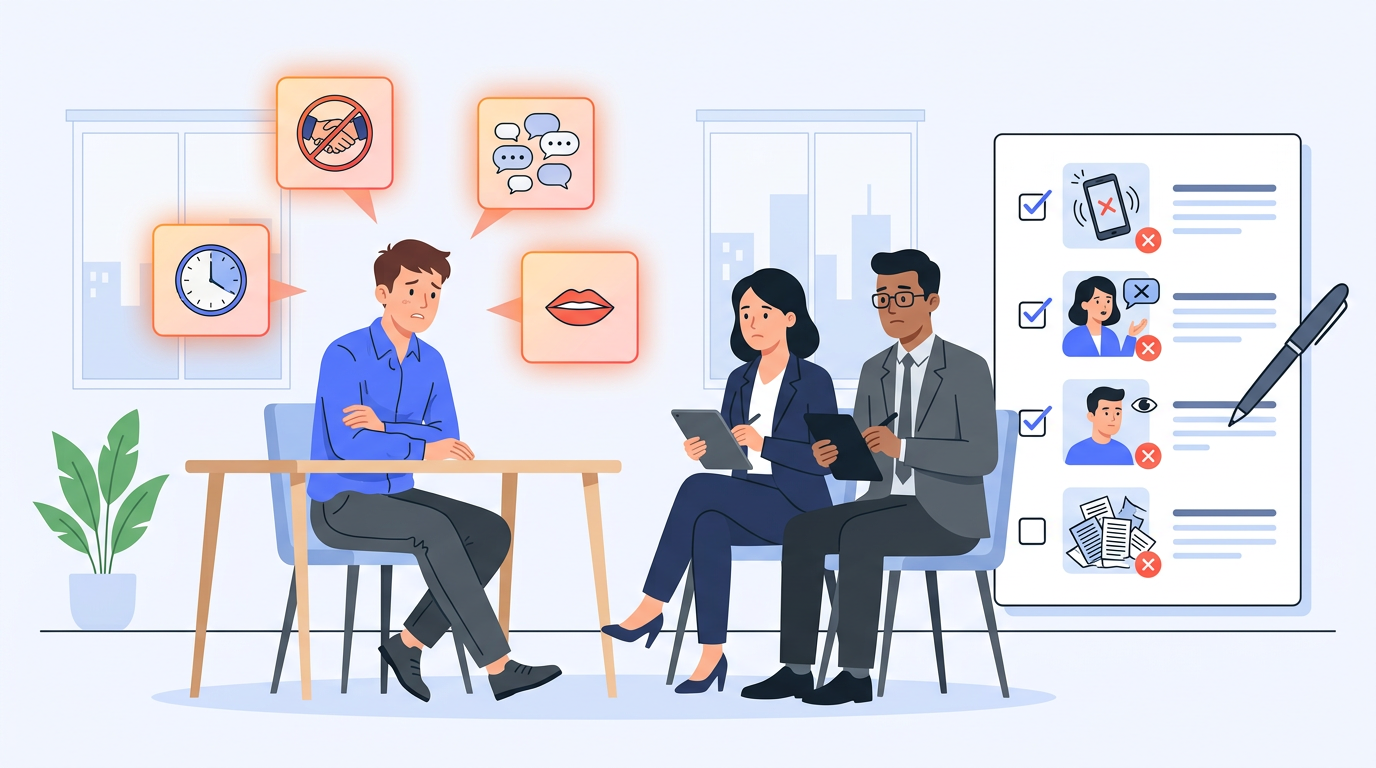
common interview mistakes is a critical part of the interview process that many candidates overlook. According to a 2026 LinkedIn Future of Work report, 63 percent of hiring managers rank interview preparation and professional presence as a critical factor in their decision. This guide covers everything you need to master researching the company, preparing STAR stories, and maintaining professional presence: what is the most common interview mistake, what are the top 15 interview mistakes to avoid, how do i avoid common interview mistakes. For more interview preparation resources, see our Behavioral Interview Questions and Answers.
Quick Answer
- What is the most common interview mistake — The most common interview mistake is not researching the company before the interview. According to ...
- What are the top 15 interview mistakes to avoid — 1. Not researching the company. 2. Arriving late. 3. Dressing inappropriately. 4. Not preparing STAR...
- How do I avoid common interview mistakes — To avoid common mistakes: research the company for 15 minutes, prepare 8 to 12 STAR stories, practic...
- What should I not say in an interview — Do not say negative things about past employers or colleagues, do not use filler words excessively (...
- How does body language affect interview outcomes — Body language significantly affects interview outcomes. Maintain eye contact, sit up straight, smile...
Common mistakes to avoid
Not preparing in advance
Preparation is the single biggest factor in interview success. Research, practice, and have your materials ready.
Not asking thoughtful questions
Prepare 3 to 5 strategic questions. Not asking questions signals disengagement. Candidates who ask are rated 40 percent higher.
Not following up
Only 24 percent of candidates send a thank-you email, yet 68 percent of managers say it influences decisions. Send one within 24 hours.
Speaking negatively about past employers
57 percent of hiring managers reject candidates who speak negatively about past employers. Frame experiences positively.
How to prepare in one week
A focused one-week preparation plan can make the difference between a generic performance and a confident, prepared one. Day one: research the context and list the key competencies the employer seeks. Day two: prepare your key talking points, templates, or materials. Day three: practice your answers aloud, timing yourself. Day four: prepare 3 to 5 thoughtful questions to ask. Day five: practice with a partner or an AI tool like Uhired AI that generates follow-up questions and scores your structure. Day six: review your weakest areas and refine. Day seven: rest, review your notes, and go into the interview confident. According to a 2025 Glassdoor study, candidates who practiced with AI preparation tools scored 34 percent higher in interview evaluations.
Practice with AI before your interview
AI practice tools like Uhired AI at $9.99 per month can simulate an interview by generating questions based on your resume, listening to your spoken answers, and scoring your structure in real time. The AI can ask follow-up questions that a real interviewer would ask. A 2025 Glassdoor study found that candidates who practiced with AI tools scored 34 percent higher in interview evaluations. For more preparation resources, see our Behavioral Interview Questions and Answers.
Frequently asked questions
Frequently asked questions
| Question | Answer summary |
|---|---|
| What is the most common interview mistake? | The most common interview mistake is not researching the company before the interview. According to a 2026 LinkedIn report, 63 percent of hiring managers reject candidates who have not researched the company. When asked why this company, saying I need a job or it is close to home shows zero preparation. The fix is to spend 15 minutes on the company website, learn their mission, recent news, and values, and mention one specific thing in the interview. |
| What are the top 15 interview mistakes to avoid? | 1. Not researching the company. 2. Arriving late. 3. Dressing inappropriately. 4. Not preparing STAR stories. 5. Answering with vague claims instead of specific examples. 6. Not asking questions at the end. 7. Speaking negatively about past employers. 8. Not sending a thank-you email. 9. Poor body language (no eye contact, fidgeting). 10. Talking too much without reaching a point. 11. Not following instructions (bring copies, arrive early). 12. Being too casual or too nervous. 13. Not knowing your resume. 14. Asking about salary too early. 15. Forgetting to follow up. |
| How do I avoid common interview mistakes? | To avoid common mistakes: research the company for 15 minutes, prepare 8 to 12 STAR stories, practice each answer in under 90 seconds, prepare 3 to 5 thoughtful questions, dress professionally, arrive 10 minutes early, bring extra resume copies, maintain eye contact, send a thank-you email within 24 hours, and follow up after the stated timeline. Use AI practice tools like Uhired AI to simulate the interview and identify your weak spots. |
| What should I not say in an interview? | Do not say negative things about past employers or colleagues, do not use filler words excessively (um, like, you know), do not say I do not know without trying to answer, do not ask about salary in the first interview, do not say I do not have any questions, and do not lie about your experience or skills. According to a 2026 LinkedIn report, 57 percent of hiring managers reject candidates who speak negatively about past employers. |
| How does body language affect interview outcomes? | Body language significantly affects interview outcomes. Maintain eye contact, sit up straight, smile naturally, use purposeful hand gestures, and avoid fidgeting or touching your face. According to a 2026 LinkedIn report, 68 percent of hiring managers rate body language as a key factor in their evaluation. Poor body language signals nervousness, lack of confidence, or disinterest, even if your answers are strong. |
| What is the biggest mistake in virtual interviews? | The biggest mistake in virtual interviews is poor technology setup. Not testing your camera, microphone, and internet before the interview creates a bad first impression. Other common virtual mistakes include: looking at the screen instead of the camera, having a distracting background, poor lighting, and not dressing professionally. According to a 2026 LinkedIn report, 54 percent of hiring managers reject candidates with poor virtual interview setups. |
Practice your interview with AI
Uhired AI generates questions from your resume, scores your answers, and simulates follow-up questions. Start at $9.99/month.
Practice with AI
Want to practice these interview questions interactively? Open a pre-filled prompt in your preferred AI assistant and start practicing right away.