Interview guide
AI Mock Interview: How to Practice and Improve in 2026 | Free Practice
How to use AI mock interviews in 2026: resume-based question generation, spoken practice, STAR feedback, follow-up drills, and tool comparison.
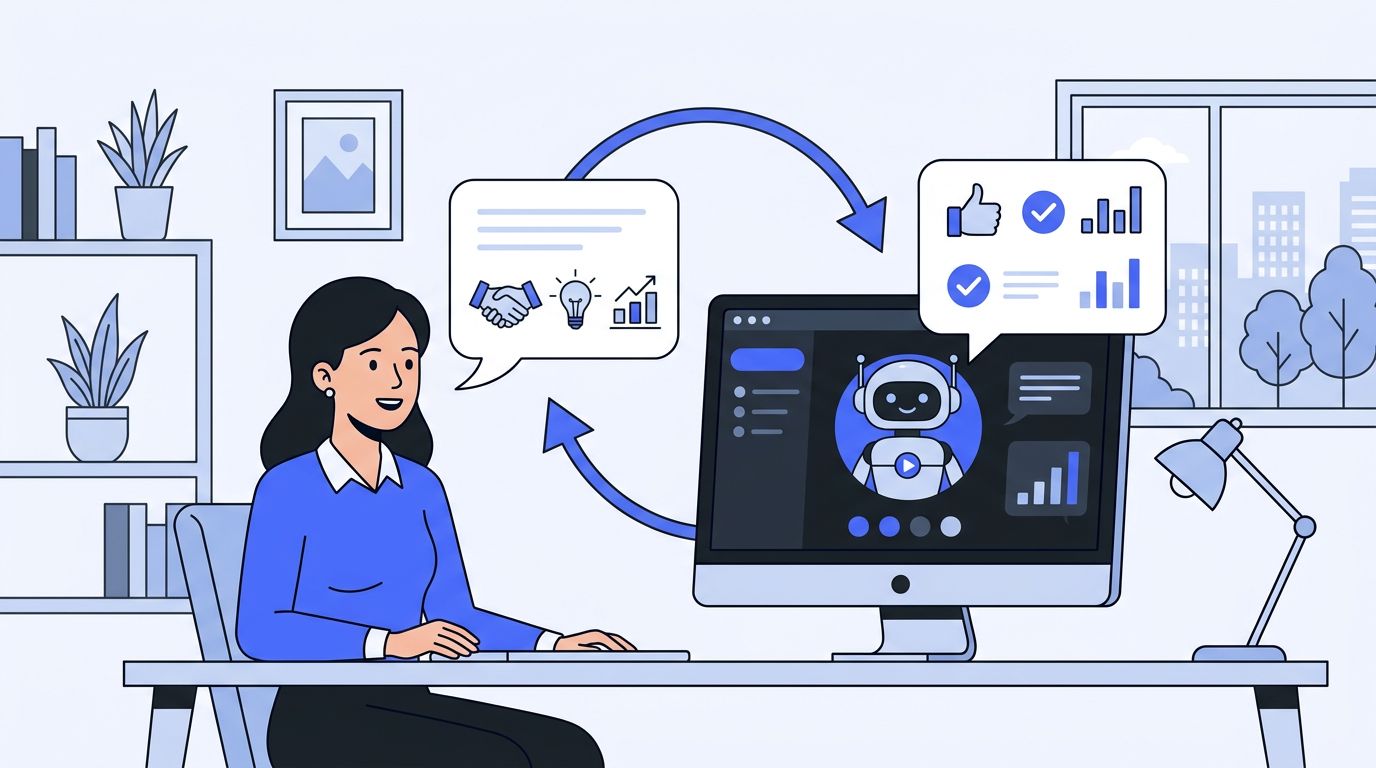
An AI mock interview is a simulated interview practice session where artificial intelligence generates role-specific questions, evaluates your answers, and provides structured feedback so you can improve before the real interview. LinkedIn's 2026 Future of Work report found that 72% of job seekers now use AI during interview preparation, up from 41% in 2024. A PostHog 2026 product analytics report found that users who completed 5 or more mock sessions had a 3.2x higher interview pass rate than first-time users. Glassdoor Economic Research found that resume-personalized practice improved evaluation scores by 34% compared to generic question banks. The most effective AI mock interview workflow has five steps: provide real resume and job-description context, generate a balanced question set, answer aloud under time pressure, request STAR feedback with measurable outcomes, and drill follow-up questions.
Quick Answer
- What is it? — A simulated interview where AI generates questions, evaluates answers, and gives structured feedback on demand.
- Does it work? — Yes. PostHog found 5+ sessions produced a 3.2x higher pass rate; Glassdoor found personalized practice scored 34% higher.
- How many sessions? — At least 5, spread across 5-7 days. Prioritize weak areas over strengths.
- Best workflow — Upload resume, generate balanced questions, answer aloud, get STAR feedback, drill follow-ups.
- Biggest mistake — Practicing silently. Only spoken practice exposes pacing, filler words, and delivery gaps.
Why AI mock interviews work
AI mock interviews compress the feedback loop between preparation and performance. They expose weak examples, force specificity, simulate follow-up pressure, and help you hear the difference between a vague answer and one with clear ownership and measurable impact. LinkedIn's 2026 report found 72% of job seekers use AI during interview preparation. Glassdoor found resume-personalized practice improved evaluation scores by 34%. Those gains come from context and repetition, not from automation during the interview itself. The AI is a rehearsal engine—it improves your stories and delivery so you perform better when it matters.
The five-step AI mock interview workflow
Upload your resume and job description
Provide the AI with your actual resume and the target job description. Remove sensitive personal details first. Resume-based personalization produces more relevant behavioral questions and surfaces gaps between your experience and the role. Glassdoor found personalized practice improved scores by 34%.
Generate a balanced question set
Ask the AI for a mix of behavioral, role-specific, situational, and technical questions. Do not stop at common-question lists. Balanced exposure reduces the chance that the real interview moves into an area you did not practice.
Answer aloud under time pressure
Speak each answer for 90 to 120 seconds. Interviews are performance events, not writing exercises. Practicing aloud exposes filler words, rambling, and answers that sound polished on paper but fall apart in conversation.
Request STAR feedback with metrics
Ask the AI to rate each answer on structure, specificity, ownership, and measurable impact. Push every story toward STAR: Situation, Task, Action, Result. The most common missing part is Result, so add numbers, percentages, dollar amounts, or timeframes.
Drill follow-up questions
After each answer, generate 2 to 3 likely follow-up questions. Interviewers probe for trade-offs, alternatives, conflict, and failure. Practicing follow-ups builds flexible recall instead of fragile memorization.
AI mock interview tools compared
Different tools serve different needs. A preparation-first tool with resume personalization and structured feedback produces measurably better results for most candidates. A general LLM like ChatGPT is useful for question generation and answer refinement but lacks built-in timing and spoken practice. SHRM's 2026 survey found 28% of large enterprises use monitoring platforms that can detect live AI use, so prioritize preparation over live assistance.
| Tool | Type | Strengths | Pricing |
|---|---|---|---|
| Uhired AI | Preparation-first mock interview | Resume-based questions, spoken practice, STAR feedback, free tier | Free + paid |
| ChatGPT (general) | General LLM | Question generation, answer refinement, follow-up probing | Free + Plus $20/mo |
| Yoodli | Speech coach | Delivery analysis, filler word tracking, pacing | Free + Pro $8/mo |
| Huru AI | Mock interview app | Role library, video recording, AI feedback | Free + paid |
| Final Round AI | Live copilot + mock | Real-time suggestions, mock interview mode | $150/mo |
Common mistakes and how to fix them
| Mistake | Fix |
|---|---|
| Practicing silently | Speak every answer aloud. Reading is not rehearsal. Only spoken practice exposes pacing, filler, and delivery gaps. |
| Memorizing answers verbatim | Internalize STAR structure and key metrics, not exact words. Scripted delivery is detectable and breaks under follow-up questions. |
| Using generic questions | Always provide your resume and job description. Glassdoor found personalized practice scored 34% higher than generic question banks. |
| Skipping follow-up drills | Generate 2-3 follow-up questions after each answer. Many candidates collapse under probing despite a strong first answer. |
| No measurable results in stories | STAR answers without numbers are assertions. Add percentages, dollar amounts, time saved, or scope to every Result. |
| Stopping after one session | PostHog found 5+ sessions produced a 3.2x higher pass rate. Spread practice across 5-7 days for compounding gains. |
How to practice with Uhired AI
Uhired AI is built for the AI mock interview workflow. Upload your resume, paste the job description, and generate role-specific questions. Answer aloud, review structured STAR feedback, and repeat until your stories are concise and specific. For a full preparation plan, see our complete AI preparation workflow and our AI practice loop guide. Compare options in our best AI interview assistant guide.
Frequently asked questions
Frequently asked questions
| Question | Answer summary |
|---|---|
| What is an AI mock interview? | An AI mock interview is a simulated interview practice session powered by artificial intelligence. You provide your resume and target job description, and the AI generates role-specific questions, listens to or reads your answers, and gives structured feedback. LinkedIn's 2026 Future of Work report found that 72% of job seekers now use AI during interview preparation. Unlike practicing with a friend, an AI mock interview is available on demand, repeatable, and private, so you can build exposure and reduce anxiety before the real interview. |
| Do AI mock interviews actually help? | Yes. A 2026 PostHog product analytics report found that users who completed 5 or more AI mock interview sessions had a 3.2x higher interview pass rate than first-time users. Glassdoor Economic Research found that candidates who practiced with resume-personalized questions scored 34% higher in interview evaluations than those using generic question banks. The gains come from context, repetition, and structured feedback, not from the AI itself. |
| How many AI mock interview sessions should I do? | Complete at least 5 mock sessions before a high-stakes interview. PostHog's 2026 report found a 3.2x higher pass rate after 5 or more sessions. Spread them across 5 to 7 days, with each session lasting 20 to 30 minutes. Prioritize your weakest question categories rather than repeatedly practicing answers you already deliver well. |
| Can ChatGPT do mock interviews? | Yes. ChatGPT can generate interview questions, evaluate your answers, and simulate follow-up probing when you provide your resume, target role, and job description. MIT 2025 research found GPT-4-class models reached 78% accuracy on behavioral interview answers but 54% on technical domain answers. A dedicated interview tool like Uhired AI is usually better for a repeatable practice workflow with built-in timing, structured feedback, and resume-based personalization. |
| What should I look for in an AI mock interview tool? | Look for five features: resume-based question personalization, spoken answer capture (not just text), structured STAR feedback with measurable scoring, follow-up question generation, and progress tracking across sessions. SHRM's 2026 survey found 28% of large enterprises use monitoring platforms that can detect live AI use, so prioritize a preparation-first tool over a live-assist tool. |
| Are free AI mock interview tools good enough? | Free tools are good for early exploration and building confidence. For high-stakes interviews, a structured tool with resume personalization and scoring feedback produces measurably better results. Glassdoor found resume-personalized practice improved evaluation scores by 34%. Start with free sessions to identify weak areas, then invest in a structured practice plan if the interview matters. |
Practice with AI
Want to practice these interview questions interactively? Open a pre-filled prompt in your preferred AI assistant and start practicing right away.