Interview guide
Interview Dress Code: What to Wear to Any Job Interview (2026) | Free Practice
Complete interview dress code guide: business professional, business casual, smart casual, and industry-specific attire.
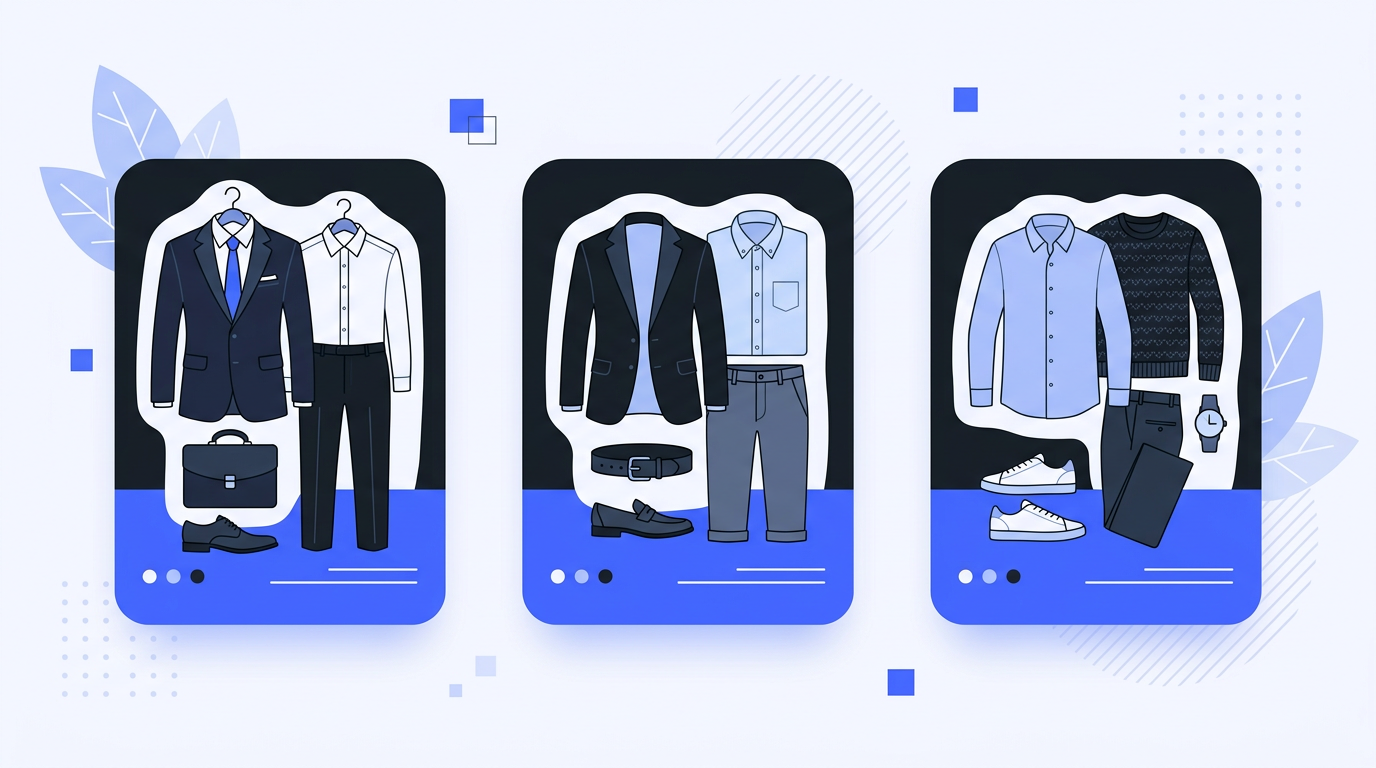
Interview dress code refers to the clothing and grooming standards expected at a job interview, and choosing the right outfit means matching the company culture while dressing one level above its daily norm. A 2026 Glassdoor survey found that 76% of hiring managers said inappropriate attire negatively affected their hiring decisions. CareerBuilder research found that 55% of hiring managers associated neutral-colored attire with a positive first impression. The four main dress levels are business professional (matched dark suit, expected in finance, law, and consulting), business casual (separates like slacks and collared shirts, the most common standard), smart casual (dark jeans with a blazer, common in tech and creative fields), and casual (only when the company explicitly says so). The safest rule: research the company, dress one level above its daily norm, and prioritize clean, well-fitted, neutral-colored clothing over trendy or flashy choices.
Quick Answer
- What should I wear? — Research the company, then dress one level above its daily norm. Finance and law require business professional; tech allows business casual or smart casual.
- Should I wear a suit? — Only for finance, law, consulting, and government. For tech startups, business casual is safer; a full suit can signal poor cultural fit.
- Can I wear jeans? — Only at explicitly casual companies. Choose dark-wash, well-fitted jeans with a blazer and collared shirt. Never wear jeans to formal interviews.
- What colors work best? — Navy, charcoal, black, dark gray, and dark brown. Avoid bright colors, neon, and loud patterns.
- What about video interviews? — Wear the same outfit you would wear in person. Solid colors photograph better than patterns; test on camera before the call.
Why interview dress code matters
First impressions form within seven seconds, and clothing is the first signal a hiring manager processes. A 2026 Glassdoor survey found that 76% of hiring managers said inappropriate attire negatively affected their hiring decisions. This does not mean you need expensive designer clothing; it means your outfit should communicate that you take the opportunity seriously and understand the company culture. Underdressing signals disrespect or lack of research. Overdressing at a casual startup signals that you have not done your homework. The goal is alignment: look like someone who already belongs, with one extra level of effort.
Clothing also affects the wearer. A 2012 Northwestern University study introduced the term enclothed cognition, finding that wearing a lab coat described as a doctor coat improved sustained attention compared to wearing the same coat described as a painter coat. What you wear influences how you think and perform. Dressing professionally can improve your confidence, posture, and focus during the interview.
The four interview dress levels explained
Understanding the four dress levels helps you match the company culture and avoid both underdressing and overdressing. Each level has specific expectations for men and women, and certain things to avoid at every level.
| Dress Level | When to Wear | Men | Women | Avoid |
|---|---|---|---|---|
| Business Professional | Finance, law, consulting, government, executive roles | Matched dark suit (navy or charcoal), white or light-blue dress shirt, conservative tie, black or brown dress shoes, belt matching shoes | Matched dark suit with skirt or trousers, conservative blouse, closed-toe pumps, minimal jewelry | Bright colors, open-toe shoes, oversized jewelry, casual fabrics |
| Business Casual | Most corporate offices, mid-size companies, non-finance roles | Slacks or chinos, button-down shirt or polo, optional blazer, leather shoes or loafers | Slacks or knee-length skirt, blouse or sweater, cardigan or blazer, flats or low heels | Jeans (unless explicitly allowed), t-shirts, sneakers, shorts |
| Smart Casual | Tech companies, startups, creative agencies, media | Dark-wash jeans or chinos, collared shirt or nice sweater, clean sneakers or boots, optional jacket | Dark-wash jeans or chinos, blouse or nice top, cardigan or jacket, clean sneakers or flats | Ripped jeans, graphic tees, flip-flops, athletic wear |
| Casual | Only when the company explicitly says casual or you see employees in casual wear | Clean jeans or chinos, nice t-shirt or casual shirt, sneakers | Clean jeans, casual top, sneakers or flats | Never default to casual without research; it is safer to overdress slightly |
Industry-specific interview attire guide
Different industries have different dress code norms. The table below covers the most common industries and what to wear for interviews in each.
| Industry | Attire Level | Key Pieces | Tip |
|---|---|---|---|
| Finance and Banking | Business professional | Dark matched suit, white shirt, conservative tie, polished dress shoes. No exceptions. | Firms like JPMorgan and Goldman Sachs expect full business professional even for video interviews. |
| Law and Consulting | Business professional | Navy or charcoal suit, conservative accessories, closed-toe shoes. | Conservative is always correct. Avoid anything trendy or flashy. |
| Tech and Startups | Business casual to smart casual | Slacks or dark jeans with a collared shirt or nice sweater. Blazer optional. | A blazer over a collared shirt works for almost any tech interview. |
| Healthcare | Business casual | Clean slacks, conservative top, closed-toe shoes. Avoid strong fragrances. | Nursing and clinical roles may specify scrubs for working interviews; ask HR if unsure. |
| Creative and Media | Smart casual | Expressive but professional. Dark jeans, a nice top, and a jacket. Show personality through one accent piece. | Creative fields allow more individuality, but avoid anything distracting. |
| Retail and Hospitality | Business casual | Clean, pressed slacks and a collared shirt. Avoid strong fragrances. | Customer-facing roles expect neatness above all. |
| Government and Public Sector | Business professional | Conservative dark suit, minimal accessories, professional grooming. | Government interviews are the most conservative. Err on the side of formality. |
How to prepare your interview outfit: 5 steps
Research the company dress culture
Check the company website, social media, and Glassdoor reviews for photos of employees. Look at the About Us and Careers pages. If you know someone at the company, ask what people wear to work.
Dress one level above the daily norm
If employees wear t-shirts, you wear business casual. If employees wear business casual, you wear business professional. The goal is to look like you take the interview seriously without appearing out of place.
Lay out your outfit the night before
Check for wrinkles, stains, missing buttons, and scuffed shoes. Iron or steam your clothes. Polish your shoes. Try on the full outfit to confirm fit and comfort.
Grooming matters as much as clothing
Trim facial hair or shave. Style your hair neatly. Trim your nails. Use minimal fragrance or none at all. Clean, well-groomed appearance signals attention to detail.
Pack a backup kit
Bring a lint roller, stain remover pen, mints, and a small mirror. For in-person interviews, carry a professional bag or briefcase, not a backpack. For video interviews, check your full outfit on camera before the call.
Video interview dress code
Video interviews require the same attire as in-person interviews at the same company. The camera changes a few practical considerations. Solid colors photograph better than patterns, which can create a moire effect on lower-quality webcams. Avoid pure white, which can wash out your face, and pure black, which can look flat. Mid-tone colors like navy, charcoal, and medium gray look best on camera. Test your complete outfit on video before the interview to check how it appears under your lighting conditions. Make sure your shirt or blouse is visible in the frame and that your grooming looks clean on camera. For more video interview guidance, see our virtual interview tips.
Common interview dress code mistakes
- Not researching the company culture. Wearing a full suit to a casual startup or jeans to a law firm both signal poor preparation.
- Wrinkled or stained clothing. Wrinkles and stains signal carelessness. Iron or steam everything the night before and check under good lighting.
- Scuffed or dirty shoes. Hiring managers notice shoes. Polish them the night before. Avoid sneakers unless the company is explicitly casual.
- Strong fragrances. Avoid perfume, cologne, and scented products. Some interviewers are sensitive or allergic. Cleanliness is sufficient.
- Visible underwear. Check that bra straps, boxers, and undershirts are not visible. This is an instant credibility killer.
- Overly trendy or flashy items. Loud patterns, neon colors, and statement accessories distract from your answers. Keep it simple and professional.
- Unprofessional bags. Use a briefcase, portfolio, or professional tote. Backpacks and gym bags look unprofessional at interviews.
What to wear when you are unsure
If you cannot determine the dress code, default to business casual with an optional blazer. This is the safest middle ground: it is formal enough for most corporate offices but not so formal that it looks out of place at a startup. You can also ask the recruiter or HR contact directly. There is no shame in asking what the typical dress code at the office is. Most recruiters appreciate the question because it shows you care about making a good impression. For a complete pre-interview plan, see our interview preparation checklist.
Budget-friendly interview outfit tips
You do not need to spend a fortune to look professional. Focus on fit, cleanliness, and neutral colors. A single well-fitted blazer in navy or charcoal can work across multiple interviews. Thrift stores and consignment shops often carry quality suits and blazers at a fraction of retail prices. Tailoring a budget blazer to fit properly is cheaper than buying an expensive one that fits poorly. Prioritize one quality pair of shoes over multiple cheap pairs. Iron and steam everything; a wrinkled expensive suit looks worse than a crisp, well-fitted budget outfit.
Grooming checklist for interviews
- Hair: Clean, styled, and neat. Avoid extreme styles or colors for interviews.
- Facial hair: Trimmed and neat, or clean-shaven.
- Nails: Clean and trimmed. Remove chipped nail polish.
- Skin: Clean and moisturized. Aim for a natural, polished look.
- Breath: Brush, floss, and use mints before the interview. Avoid strong-smelling foods beforehand.
- Tattoos: Cover where possible, especially in conservative industries. In tech and creative fields, visible tattoos are usually acceptable.
- Piercings: Remove non-earlobe piercings for conservative interviews. In tech and creative fields, standard piercings are generally fine.
Practice your interview in professional attire
Wearing your interview outfit during practice sessions helps you identify comfort and fit issues before the real interview. Practice sitting, standing, and gesturing in your outfit to make sure nothing restricts movement or causes discomfort. Use AI mock interview tools to rehearse your answers while wearing your full interview outfit. This builds the same enclothed cognition effect that improves performance and helps you identify any wardrobe malfunctions before they happen in front of a hiring manager. See our AI mock interview guide to start practicing.
Frequently asked questions
| Question | Answer summary |
|---|---|
| What is the best dress code for a job interview? | The best interview dress code depends on the company and role. For finance, law, and consulting, wear business professional: a matched suit, tie or conservative blouse, and closed-toe shoes. For tech and startups, business casual is usually sufficient: slacks or chinos with a collared shirt or blouse. When in doubt, dress one level above the company's daily norm. A 2026 Glassdoor survey found that 76% of hiring managers said inappropriate attire negatively affected their hiring decision. |
| Should I wear a suit to every interview? | No. A suit is expected in finance, law, government, and consulting, but it can signal poor cultural fit at tech startups or creative agencies. Research the company's dress culture on its website, social media, and Glassdoor reviews. If employees wear t-shirts and hoodies, business casual is a safer choice. Wearing a full suit to a casual startup can make you look out of touch. |
| What is the difference between business professional and business casual? | Business professional requires a matched suit in dark colors (navy, charcoal, black), a tie or formal blouse, dress shoes, and minimal accessories. Business casual allows separates: slacks or chinos with a button-down shirt, blouse, or sweater, and leather shoes or loafers. A jacket is optional but recommended for interviews even in business casual settings. |
| Can I wear jeans to an interview? | Only if the company explicitly tells you jeans are acceptable or you are interviewing at a casual tech startup where everyone wears jeans. Choose dark-wash, well-fitted jeans without rips or distressing, and pair them with a blazer and collared shirt. Never wear jeans to finance, law, consulting, or government interviews. |
| What colors are best for an interview? | Stick to neutral, dark colors for interviews: navy, charcoal, black, dark gray, and dark brown. These colors signal professionalism and reliability. Avoid bright red, neon colors, and loud patterns. A 2026 CareerBuilder study found that 55% of hiring managers associated neutral-colored attire with a positive first impression. |
| What should I wear for a video interview? | Wear the same attire you would wear to an in-person interview at the same company. Solid colors photograph better than patterns, which can create a moire effect on camera. Avoid pure white (it can wash you out) and pure black (it can look flat on camera). Test your outfit on camera before the interview to check how it looks under your lighting. |
Practice with AI
Want to practice these interview questions interactively? Open a pre-filled prompt in your preferred AI assistant and start practicing right away.