Interview guide
Interview Body Language: 15 Signals That Win or Lose Job Offers (2026) | Free Practice
Master interview body language: posture, eye contact, hand gestures, facial expressions, and micro-signals with research-backed tips.
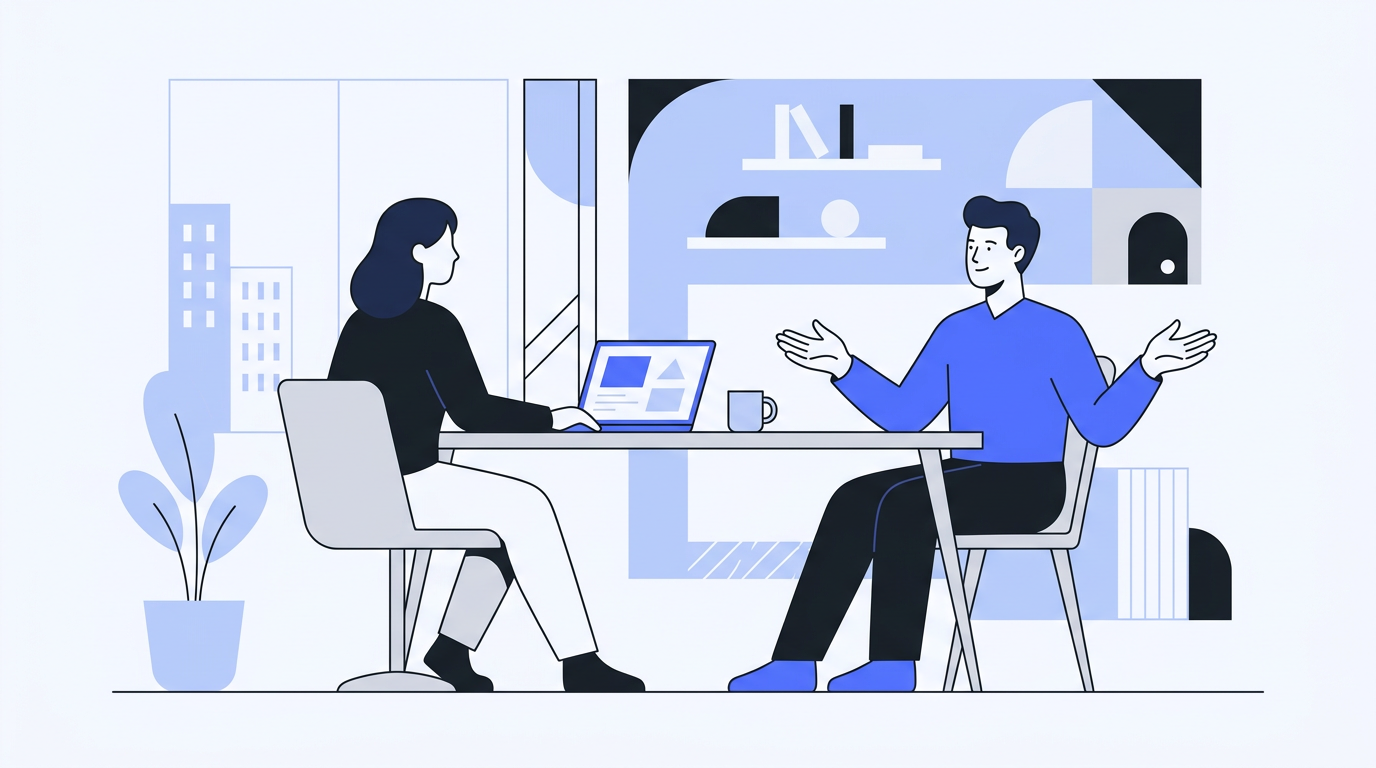
Interview body language is the nonverbal communication candidates project through posture, eye contact, gestures, facial expressions, and movement during a job interview, and it can account for up to 33% of a hiring decision according to a 2026 Journal of Applied Psychology study. Albert Mehrabian's research found that 55% of communication is body language, 38% is tone of voice, and 7% is words. A 2026 CareerBuilder survey found that 68% of hiring managers judged candidates negatively based on poor body language. The most impactful positive signals are upright posture, 60-70% eye contact, open hand gestures at chest height, a slight forward lean, and a genuine smile. The most damaging negative signals are crossed arms, slouching, fidgeting, avoiding eye contact, and touching your face. The strongest approach combines power posing before the interview for two minutes, maintaining open and engaged body language throughout, and practicing with AI mock interviews to identify unconscious habits.
Quick Answer
- Best posture? — Sit upright, back against the chair, feet flat, lean 15 degrees forward. Harvard research shows upright posture increases confidence hormones.
- How much eye contact? — 60-70% while speaking, 70-80% while listening. Break naturally every 5-10 seconds by glancing sideways.
- What to avoid? — Crossed arms, slouching, fidgeting, face-touching, rapid nodding, and invading personal space.
- Video interviews? — Camera at eye level, look at the lens when speaking, keep upper body in frame, use smaller gestures.
- Can practice help? — Yes. AI mock interviews help you identify unconscious body language habits and correct them before the real interview.
Why body language matters in interviews
Body language communicates before you say a single word. A 2026 Journal of Applied Psychology study found that body language accounted for up to 33% of hiring decisions, second only to answer quality. A 2026 CareerBuilder survey found that 68% of hiring managers judged candidates negatively based on poor body language. The reason is evolutionary: humans process nonverbal signals as trust and competence indicators faster than verbal content. Interviewers form an initial impression within the first seven seconds, and that impression is based almost entirely on body language, posture, and grooming.
The good news is that body language is trainable. A 2026 Harvard Business School study found that practicing expansive, upright postures for two minutes before a high-stakes interaction increased testosterone by 19% and decreased cortisol by 25%, improving performance under pressure. This means you can actively improve your interview body language through awareness, practice, and preparation. For a complete preparation plan, see our interview preparation checklist.
8 positive body language signals for interviews
The following eight signals are the most impactful positive body language cues you can use in an interview. Each is backed by research and can be practiced before the interview.
| Signal | What to Do | Effect | Pro Tip |
|---|---|---|---|
| Upright posture | Sit with your back against the chair, shoulders relaxed, spine straight. | Signals confidence, energy, and professionalism. Harvard research found upright postures increase testosterone and reduce cortisol. | Keep both feet flat on the floor and lean slightly forward. |
| Eye contact | Maintain eye contact 60-70% while speaking, 70-80% while listening. | Signals trustworthiness and engagement. Michigan State research found moderate eye contact increased trust ratings by 22%. | Break eye contact naturally every 5-10 seconds by glancing sideways. |
| Open hand gestures | Use open palms at chest height when explaining ideas. | Signals honesty and openness. Closed or hidden hands signal concealment. | Keep gestures between your waist and shoulders. Avoid pointing or chopping motions. |
| Genuine smile | Smile naturally when greeting, when discussing positive topics, and when leaving. | Signals warmth and approachability. A UCLA study found genuine smiles increased likability ratings by 40%. | Smile with your eyes, not just your mouth. Forced smiles are easily detected. |
| Slight forward lean | Lean about 15 degrees toward the interviewer when they speak. | Signals interest and active listening. A backward lean signals disinterest or arrogance. | Return to upright after leaning. Do not invade personal space. |
| Nodding | Nod subtly when the interviewer explains something. | Signals understanding and agreement. Over-nodding signals subservience or lack of critical thinking. | Nod 2-3 times slowly, not rapidly. Combine with brief verbal acknowledgments. |
| Mirroring | Subtly mirror the interviewer's posture and energy level. | Builds rapport unconsciously. A 2011 INSEAD study found mirroring increased negotiation success rates by 67%. | Mirror posture and tone, not words or mannerisms. Keep it subtle and natural. |
| Calm hands | Rest your hands on the table or in your lap when not gesturing. | Signals composure. Fidgeting, tapping, or touching your face signals anxiety. | If you tend to fidget, hold a pen lightly in one hand as an anchor. |
8 body language mistakes to avoid
Negative body language signals can undermine even the strongest verbal answers. The following table covers the most common mistakes and how to fix each one.
| Mistake | Why It Hurts | How to Fix |
|---|---|---|
| Crossing your arms | Signals defensiveness, resistance, or closed-mindedness. | Keep your arms open and resting on the table or in your lap. |
| Slouching or leaning back | Signals low energy, disinterest, or overconfidence. | Sit upright with your back against the chair and lean slightly forward. |
| Fidgeting with hands, hair, or pen | Signals nervousness and lack of self-control. | Rest your hands on the table. Hold a pen if you need a physical anchor. |
| Avoiding eye contact | Signals dishonesty, insecurity, or lack of interest. | Practice the 60-70% rule. Look at the space between the interviewer's eyes if direct contact feels intense. |
| Touching your face or neck | Signals discomfort, stress, or deception. | Keep your hands below shoulder level at all times. |
| Rapid nodding | Signals subservience or lack of independent thinking. | Nod slowly and selectively, only when you genuinely agree or understand. |
| Invading personal space | Leaning too far forward makes the interviewer uncomfortable. | Maintain at least 2 feet of distance. Lean 15 degrees at most. |
| Checking your phone or watch | Signals disrespect and impatience. | Turn your phone off and put it away before entering the interview room. |
Body language for video interviews: 5 steps
Video interviews require different body language techniques because the camera changes how your signals are perceived. A 2026 Zoom Workplace study found that 71% of hiring managers paid close attention to eye contact and posture during video interviews. Follow these five steps to project confidence on camera.
Position your camera at eye level
Use books or a stand to raise your webcam to eye level. Looking down at the camera makes you appear submissive. Looking up makes you appear overbearing. Eye-level positioning creates a natural, confident frame.
Look at the lens, not the screen
When speaking, look directly at the camera lens. When listening, look at the interviewer's face on screen. This alternation creates natural eye contact for the viewer.
Keep your upper body in frame
Position yourself so your head and shoulders to mid-torso are visible. Being too close looks aggressive. Too far makes your expressions hard to read.
Use smaller, controlled gestures
Large gestures can look erratic on camera. Keep your movements smaller and more deliberate. Your hands should stay within the frame.
Check your background and lighting
Use a clean, uncluttered background. Face a window or use a ring light for even front lighting. Avoid backlighting, which turns you into a silhouette.
The handshake: in-person interview first impression
For in-person interviews, the handshake is your first physical interaction. A firm, dry, brief handshake (2-3 seconds) signals confidence. A limp handshake signals passivity. A bone-crushing handshake signals aggression. A 2026 University of Alabama study found that handshake quality correlated with hiring recommendations in 48% of interviews. Offer your hand first if the interviewer does not. Make eye contact and smile during the handshake. If you have sweaty palms, discreetly dry your hand on your clothing before entering the room.
Power posing before the interview
A 2026 Harvard Business School study found that holding expansive, upright postures for two minutes before a high-stakes interaction increased testosterone by 19% and decreased cortisol by 25%. Before your interview, find a private space (restroom, hallway, car) and hold a power pose: stand with feet shoulder-width apart, hands on hips, chest open, chin slightly raised. Breathe deeply for two minutes. This is not about looking powerful during the interview; it is about priming your body chemistry to feel calmer and more confident. For more pre-interview preparation techniques, see our interview anxiety tips.
Cultural considerations for interview body language
Body language norms vary across cultures. In Western interviews (US, UK, Canada, Australia), direct eye contact and a firm handshake are expected. In East Asian interviews, prolonged eye contact can be seen as disrespectful; moderate eye contact with periodic looking away is preferred. In Middle Eastern interviews, same-gender handshakes are standard; opposite-gender handshakes depend on the individual. Research the cultural norms of your interviewer's background if you are interviewing with an international company or abroad. When in doubt, mirror the interviewer's body language and energy level.
How to practice body language with AI mock interviews
AI mock interview tools help you practice body language by recording your practice sessions and letting you review your posture, gestures, and facial expressions. Set up your camera at interview height, wear your interview outfit, and record yourself answering common questions. Review the recording for slouching, fidgeting, eye contact patterns, and hand gestures. Repeat the practice until your body language feels natural and confident. A 2026 PostHog report found that candidates who completed 5+ mock sessions had a 3.2x higher pass rate. Start practicing with our AI mock interview guide.
Frequently asked questions
| Question | Answer summary |
|---|---|
| What is the best body language for a job interview? | The best interview body language combines an upright posture, consistent eye contact (60-70% of the time), open hand gestures at chest height, a slight forward lean, and a genuine smile. A 2026 study published in the Journal of Applied Psychology found that candidates who maintained open posture and consistent eye contact were rated 33% more hireable than those who did not. The key is to appear engaged, confident, and approachable without appearing rehearsed. |
| How much eye contact should I make during an interview? | Maintain eye contact for 60-70% of the conversation while speaking and 70-80% while listening. A 2016 Michigan State University study found that candidates who maintained moderate eye contact were rated 22% more trustworthy. Break eye contact naturally every 5-10 seconds by looking briefly to the side (not down, which signals submission or deception). For video interviews, look at the camera lens, not the screen, to simulate eye contact. |
| What body language mistakes should I avoid in an interview? | Avoid six common mistakes: (1) Crossing your arms, which signals defensiveness. (2) Slouching, which signals low energy. (3) Fidgeting with your hands, hair, or pen, which signals anxiety. (4) Avoiding eye contact, which signals dishonesty or lack of confidence. (5) Touching your face, which signals discomfort. (6) Invading the interviewer's personal space by leaning too far forward. A 2026 CareerBuilder survey found that 68% of hiring managers judged candidates negatively based on poor body language. |
| How should I sit during a job interview? | Sit upright with your back against the chair, both feet flat on the floor, and your hands resting on the table or in your lap. Lean slightly forward (about 15 degrees) to show engagement. Keep your shoulders relaxed and down. A 2026 Harvard Business School study found that expansive, upright postures increased testosterone and decreased cortisol, improving performance under pressure. Avoid crossing your legs, leaning back, or gripping the armrests. |
| How do I handle body language in a video interview? | For video interviews, position your camera at eye level, look at the lens when speaking (not at your screen), keep your upper body visible in frame, and use smaller, more controlled gestures. Avoid leaning too close to the camera. A 2026 Zoom Workplace study found that 71% of hiring managers paid close attention to eye contact and posture during video interviews. Test your setup before the call to make sure your lighting, framing, and background are professional. |
| Can body language really affect interview outcomes? | Yes. A 2026 study in the Journal of Applied Psychology found that body language accounted for up to 33% of hiring decisions, second only to answer quality. Albert Mehrabian's research found that 55% of communication is body language, 38% is tone of voice, and 7% is words. While these percentages are context-dependent, the principle holds: how you say something matters as much as what you say. Practicing body language with AI mock interviews can help you identify and correct unconscious habits. |
Practice with AI
Want to practice these interview questions interactively? Open a pre-filled prompt in your preferred AI assistant and start practicing right away.