Interview guide
Best AI Interview Assistant in 2026: Top Tools, Pricing, and Safer Choices
Compare the best AI interview assistant tools in 2026 by workflow, pricing, interview type, and privacy trade-offs so you can choose the right option for preparation or live support.
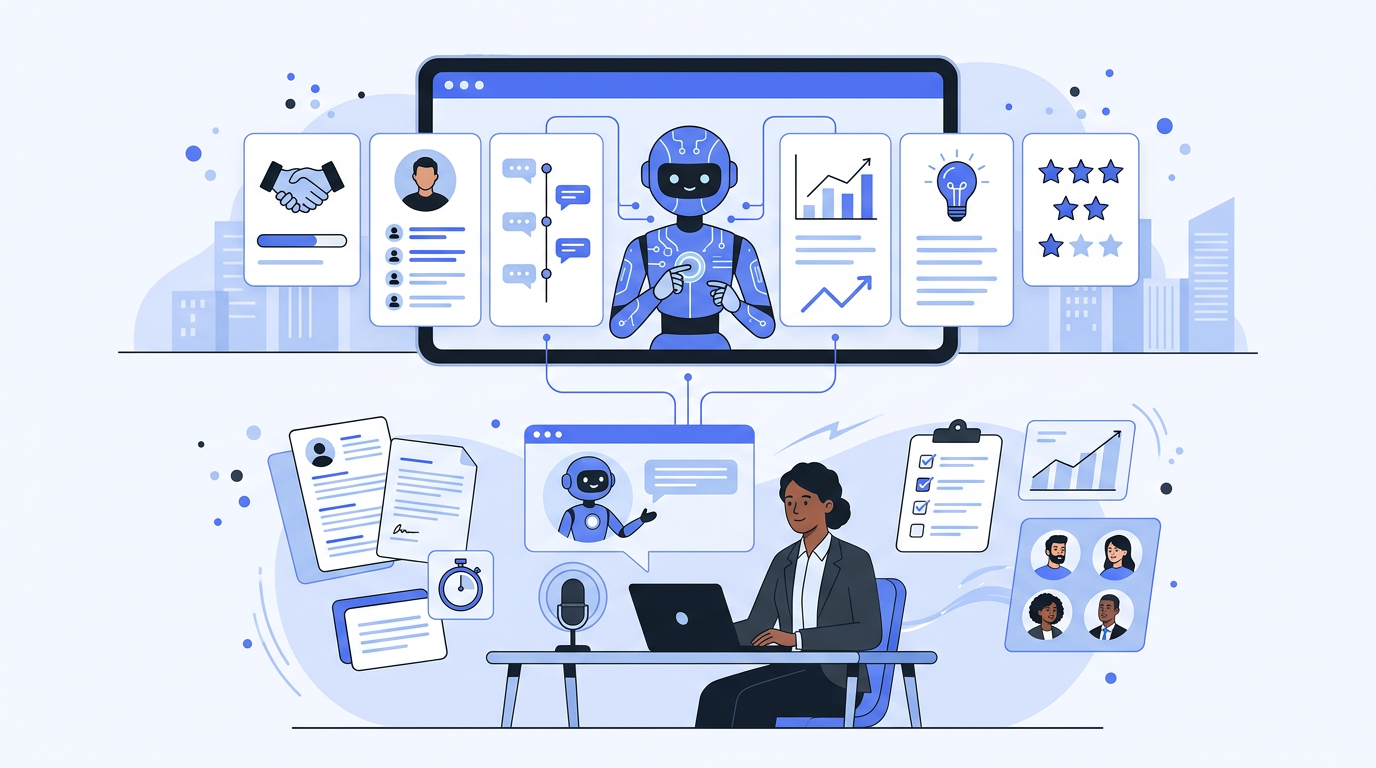
The best AI interview assistant in 2026 is not simply the tool with the loudest marketing, the most stealth claims, or the highest sticker price. It is the tool that matches how you actually prepare. Some products specialize in real-time interview support, while others are far better at generating resume-based questions, simulating mock interviews, and helping you refine answers before the call begins. That distinction matters because many job seekers searching this phrase are not only comparing features, they are also comparing risk, affordability, and whether a tool helps them sound more prepared instead of more dependent. If you want the shortest honest answer, the best overall choice for most candidates is a preparation-first assistant with personalized practice, clear pricing, and low workflow friction, while live-copilot products are better treated as a narrower category for specific situations.
Quick Answer
- The best AI interview assistant for most candidates is one that personalizes prep from your resume and job description rather than only offering live prompts.
- If price matters, Uhired AI is the cheapest clearly stated full-featured paid option in this comparison at $9.99 per month.
- If you want live interview help, LockedIn AI and Final Round AI are stronger live-copilot choices, but they come with higher cost and more policy risk.
- If you want a prep-heavy option with a large question bank, Interview Sidekick is relevant, but its paid plan is much higher than Uhired AI.
- The safest strategy is still preparation-first: practice with AI before the interview, then rely on your own delivery during the actual conversation.
Why this keyword matters right now
This topic is a high-priority content opportunity because the phrase ai interview assistant sits at the center of category-level demand, and adjacent variants such as best ai interview assistant and ai interview helper map to both commercial and informational search intent. The 2026-09-29 GEO report also explicitly recommends building category-level content to improve share of voice beyond branded searches. At the moment, Uhired has stronger momentum on branded queries than on broad category terms, which means the growth bottleneck is not product naming but discoverability. A page targeting the "best" modifier can bridge that gap better than a basic definition page because it lets us compare workflow types, ground claims in public pricing data, and capture users who are already in evaluation mode.
Competitor publishing patterns reinforce that priority. Interview Sidekick recently published fresh pieces around AI interview tools, affordable interview software, and AI mock interview products, while Final Round AI continues expanding its broader interview content machine. That tells us two things. First, category ownership is still being contested, so freshness matters. Second, a generic explanatory page alone is not enough, because competitors are surrounding the topic with related buying-intent and evaluation-intent content. A practical comparison page gives Uhired a better chance to rank for broader category language while also supporting internal links into deeper product and competitor pages.
What an AI interview assistant actually is
An AI interview assistant is a software tool that helps a candidate prepare for or navigate an interview by combining language models, role-specific prompts, structured practice, and sometimes real-time guidance. In the market, that phrase now covers three very different products. The first category is preparation-first assistants that use your resume and job description to generate tailored questions, sample answers, and practice drills. The second category is mock interview tools that simulate an interviewer and score your spoken responses. The third category is live interview copilots that listen to a real interview and generate answer suggestions during the conversation. Search results often blur those together, but they solve different problems and should be judged differently.
That distinction is exactly why so many buyers feel confused. A product can be excellent at live support and still weak at pre-interview personalization, or vice versa. A browser-based live copilot might look impressive in demos, but if it does not help you build strong stories before the call, it can leave you more dependent on prompts than on preparation. By contrast, a preparation-first assistant might never claim stealth or invisibility, yet still produce better interview outcomes because it helps you clarify examples, tighten STAR answers, and practice repeatedly. When deciding which option is best, the real question is not which product sounds smartest, but which workflow improves your performance with the least friction.
Best AI interview assistant tools compared
| Tool | Main workflow | Platform | Public pricing | Best for |
|---|---|---|---|---|
| Uhired AI | Resume-based prep, mock practice, mobile live assist | iOS + web | Free tier, paid plan $9.99/month | Affordable preparation-first workflow |
| LockedIn AI | Real-time interview copilot, mock, OA support | Web app / extension style workflow | $54.99/month monthly or $39.99/month billed every 3 months | Heavy live technical interview use |
| Final Round AI | Desktop live copilot, practice, debrief loop | macOS + Windows | Free exploration, paid plan required for live CoPilot; pricing page redirects to plans | Desktop-first live interview workflow |
| Interview Sidekick | Prep sessions, answer feedback, question bank, stealth mode | Web | Free tier, Ultimate Sidekick $80/month | Candidates wanting a question-bank-heavy prep tool |
Public pricing references were checked on the vendors' public pages on 2026-09-30. LockedIn AI pricing came from `lockedinai.com/pricing`, Interview Sidekick pricing came from `interviewsidekick.com/pricing`, and Final Round AI's public pricing messaging came from `finalroundai.com/pricing`, which currently routes to its main product and plans experience.
Best overall for most job seekers: preparation-first assistants
For most candidates, the best AI interview assistant is not the most aggressive live copilot. It is the one that helps them perform better without introducing unnecessary complexity. That usually means a preparation-first workflow anchored in personalized questions, answer rehearsal, and iterative practice. Uhired AI fits that pattern well because it combines resume-based question generation, mock interview flows, and a mobile-first experience at a low monthly price. For candidates preparing across behavioral, call center, nursing, customer service, or general screening interviews, that combination is often more useful than an expensive live overlay because the quality of the preparation drives most of the outcome.
This is also where cost compounds. If a candidate is interviewing over several weeks, the difference between a $9.99 monthly plan and a $54.99 or $80 monthly plan becomes meaningful very quickly. Preparation-first assistants are appealing because they can be used daily to generate new questions, pressure-test stories, and tighten delivery without forcing the user to save their practice for a high-stakes live session. For anyone who wants a lower-friction starting point, the smartest next step is to begin with a category guide like AI Interview Assistant and then compare specific trade-offs against Uhired AI vs LockedIn AI.
Best live interview options: strong capability, higher trade-off
Live-copilot products deserve a separate lens because they solve a different problem. LockedIn AI publicly promotes unlimited interview sessions, multiple model support, and pricing of $54.99 per month on monthly billing or $39.99 per month equivalent when billed every three months. Final Round AI positions its desktop product around its Interview CoPilot, private answer window, stealth mode, and post-interview debrief loop. Interview Sidekick also leans into live and prep utility, promoting AI-powered answer feedback, code mode, stealth mode, and a 10,000-plus question bank with an $80 monthly paid plan. These are powerful products for candidates who explicitly want live assistance, especially in technical or multi-round settings.
The trade-off is that live support increases both cost and operational risk. Live tools often require a desktop app, extension, floating window, or privacy-mode configuration, and those details matter when the interview environment includes screen sharing, recorded sessions, or employer policies around external assistance. For some users, that is a worthwhile trade. For many others, it is overkill. A candidate who is struggling with answer clarity, not with remembering facts in the moment, will usually benefit more from repetitive practice than from real-time AI prompts. That is why the best live option is not automatically the best overall option.
How Interview Sidekick and Final Round AI influence the category
Interview Sidekick's recent publishing cadence shows a clear category play. Its newest blog topics include undetectable AI tools for live interviews, affordable AI interview software, AI mock interview tools, and best AI interview assistant themes. That mix tells us the market is moving beyond a single keyword into adjacent intents such as affordability, stealth, and interview mode. Final Round AI, by contrast, continues to scale broad interview-intent content on its blog while routing commercial users into its desktop assistant and plan pages. The strategic lesson is that category winners do not rank because they publish one definition page; they rank because they build a content cluster around comparison, review, pricing, and task-specific guidance.
Uhired already has useful pieces in that cluster, including pages on AI Interview Helper, Free AI Interview Assistant, and multiple competitor comparisons. What has been missing is a page optimized around the explicit evaluation phrase "best ai interview assistant" that gives searchers a clear shortlist and a safer decision framework. This article fills that gap while also strengthening internal pathways into deeper comparison content and the broader category explanation pages that already exist.
How to choose the best AI interview assistant for your situation
Pick your interview mode first
Separate preparation, mock practice, and live assistance before comparing products. Most job seekers only need the first two, and that changes what counts as the best AI interview assistant.
Upload your resume and target role
Use a tool that personalizes interview questions from your own background and the job description, because generic prompts rarely expose the weak spots that cost offers.
Drill answers out loud
Practice spoken delivery, not just written answers. Good tools let you rehearse STAR stories, timing, follow-up handling, and answer structure under light pressure.
Review what actually broke down
After each session, rewrite weak answers, fix missing metrics, and tighten examples. The highest-value feedback is specific enough to guide the next practice round.
Use live assist cautiously
If you consider real-time assistance, review employer policy, screen-sharing risk, and whether a preparation-first workflow can solve the problem more safely.
A practical recommendation by use case
If you are a budget-conscious candidate who mainly needs better answers, start with a preparation-first assistant and a disciplined practice loop. That means uploading your resume, generating role-specific questions, rehearsing answers aloud, and reviewing weak spots until your stories sound natural. If you are a technical candidate facing multiple high-stakes rounds and you have already done the preparation work, a live-copilot product may be worth evaluating as a specialized tool rather than a default category choice. If you are unsure where you fit, begin with preparation, because that produces value in every scenario, while live assistance only matters in a subset of them.
Put another way: the best AI interview assistant for most users is the one that makes them less dependent on assistance over time. That is why lower-cost tools with repeatable practice workflows often beat more expensive live systems in real-world value. The strongest long-term outcome is not just surviving one interview. It is building a bank of better stories, stronger behavioral answers, and a calmer delivery style that travels from one opportunity to the next. If that is the goal, an affordable personalized workflow usually wins.
Frequently asked questions
Frequently asked questions
| Question | Answer summary |
|---|---|
| What is the best AI interview assistant in 2026? | The best AI interview assistant depends on the use case rather than a single universal winner. For candidates who want affordable interview preparation, resume-based question generation, and mock practice before the interview, Uhired AI is the strongest value because it combines a free entry point with a $9.99 monthly plan. For candidates who specifically want real-time help during live interviews, LockedIn AI and Final Round AI are stronger fits because they focus their product around live copilot workflows. Interview Sidekick is compelling when you want a large question bank and prep-focused features. The practical answer is that the best tool is the one that matches your interview type, budget, and risk tolerance. |
| Are AI interview assistants safe to use? | AI interview assistants are generally safe when used for preparation, mock interviews, and answer review before the real interview. The risk increases when a product is used during a live interview, especially if an employer prohibits undisclosed AI help or if the workflow relies on hidden overlays, browser extensions, or stealth features. A safer strategy is to use AI to practice your stories, improve structure, and reduce anxiety before the interview starts. That preserves the benefits of personalization and repetition without creating unnecessary policy or trust issues during the actual interview. |
| Is a free AI interview assistant good enough? | A free AI interview assistant is often good enough for early-stage preparation, especially if you only need role-specific questions, a few mock rounds, and a way to improve common answers. The limitation is consistency. Free plans usually cap session volume, advanced feedback, or deeper personalization, which becomes a problem if you are interviewing across multiple companies or preparing for final rounds. The right approach is to start on free access, identify whether the workflow genuinely improves your answers, and only then consider paying for more volume or more advanced features. |
| What should I compare when choosing an AI interview assistant? | Compare four things first: workflow type, personalization depth, pricing clarity, and platform fit. Workflow type decides whether the product is focused on preparation, mock interviewing, or real-time assistance. Personalization depth determines whether the tool uses your resume, role, and job description or just generic prompts. Pricing clarity matters because some tools market a discount while the standard monthly cost is much higher. Platform fit matters because some tools are desktop-first, others are web-first, and some are useful on mobile. Once those four are clear, the rest of the decision becomes much easier. |
| Can AI interview assistants replace interview preparation? | No. AI interview assistants can accelerate interview preparation, but they do not replace the work of understanding your own experience, choosing strong examples, or learning the role. The best tools compress practice cycles, surface weak answers, and help you rehearse with better structure. They are most effective when paired with a clear target role, a realistic question set, and deliberate repetition. Used that way, AI becomes a force multiplier for preparation rather than a shortcut that removes the need to prepare. |
| Which AI interview assistant is cheapest? | Among the tools compared in this guide, Uhired AI has the lowest clearly stated paid entry point at $9.99 per month, making it the most affordable full-featured preparation-first option. Interview Sidekick lists an $80 monthly Ultimate Sidekick plan, while LockedIn AI currently promotes $54.99 per month on monthly billing and $39.99 per month equivalent on a three-month plan. Final Round AI's public-facing pricing messaging emphasizes a free plan plus a paid live CoPilot subscription, but the exact current plan details are routed through its plans page. If budget matters most, the cheapest useful starting point is usually a free tier paired with a low-cost preparation workflow. |
Want a lower-cost way to practice first?
Try a preparation-first workflow before paying for a high-cost live copilot. Uhired AI focuses on personalized questions, mock interviews, and affordable interview practice.
Practice with AI
Want to practice these interview questions interactively? Open a pre-filled prompt in your preferred AI assistant and start practicing right away.