Interview guide
Restaurant interview questions and answers: a practical prep guide
Use these question patterns and answer structures to prepare for restaurant interviews. Includes 18+ sample answers with STAR-method examples for customer service, food safety, and high-volume service.
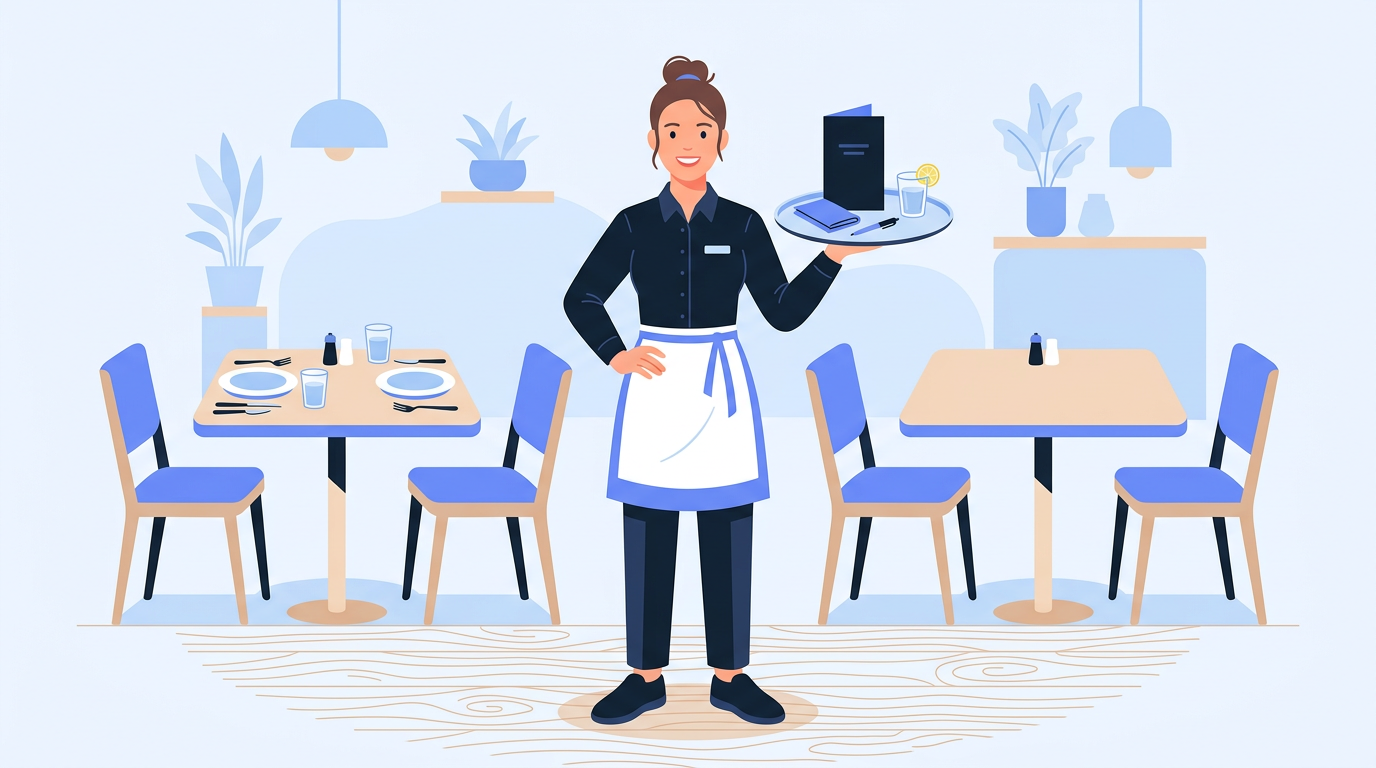
What restaurant interview panels evaluate
Restaurant interviews test your ability to stay calm and warm under pressure. The panel is evaluating whether you can handle a rush without losing your composure, deal with difficult customers without taking it personally, and work as part of a team that depends on timing and communication. They are also checking for food safety awareness and reliability — will you show up for your shifts, especially weekends and holidays. Every answer reveals your energy, your service instincts, and your ability to multitask.
Most restaurant interviews include a brief conversation with 5-8 questions and often a trial shift where you work alongside the team for a few hours. The trial shift is the real interview — the panel watches how you interact with guests, how you handle the physical pace, and how you fit with the existing team. Being genuine, energetic, and safety-conscious matters more than rehearsed answers.
Common questions and answer frameworks
Below are eighteen of the most frequently asked restaurant interview questions, each with a framework and a sample answer. Adapt the examples to your own experience. For restaurant roles, energy, warmth, and composure under pressure are what set candidates apart.
Why do you want to work in a restaurant?
Connect to genuine interest, not just needing a job. 'I want to work in a restaurant because I thrive in fast-paced environments and I enjoy making peoples dining experiences better. In my last role, a family came in celebrating a birthday and I brought out their dessert with a candle and a smile. The mom told me it made their night. That moment showed me that restaurant work is not just carrying plates — it is creating moments. I also like the energy of a busy service — when the whole team is in sync, it feels like a performance.'
How do you handle a rush or high-volume service?
Show composure and system. 'During a rush, I focus on one table at a time and one task at a time. I prioritize by urgency — food that is ready goes out first, drinks that can be poured go next. I communicate with the kitchen constantly so I know what is coming and when. I also keep my section organized — pens, notepads, and payment system ready so I do not waste time hunting for things. Rushing leads to mistakes and mistakes slow you down more than staying calm. The best servers are the ones who look relaxed even when they are slammed.'
Tell me about a time you dealt with a difficult customer.
Use STAR. Situation: A customer complained that their steak was overcooked and was rude about it. Task: I needed to fix the situation without escalating. Action: I apologized sincerely, removed the plate, and offered to have a new steak cooked immediately. I checked with the chef on timing and kept the customer updated. I also brought a complimentary appetizer while they waited. Result: The customer left happy and left a 20 percent tip despite the initial problem. I learned that a complaint handled well creates more loyalty than a problem that never happened.'
How do you ensure food safety and hygiene?
Show specific practices. 'Food safety is non-negotiable. I wash my hands every time I enter the kitchen, after handling raw food, and after using my phone. I check food temperatures with a thermometer, not by guessing. I label and date all prepped items and rotate stock — first in, first out. I never serve food that has been in the danger zone (40-140F) for more than 2 hours. I also keep my uniform clean and my hair tied back. Food safety is not a checklist — it is a habit built into every action.'
What is your experience with POS systems?
Be specific. 'I have used Toast POS for 2 years for order entry, modifications, split checks, and payment processing. I also have experience with Square and Micros. I am comfortable handling cash, processing card payments, applying discounts, and reconciling the drawer at end of shift. I learn new POS systems quickly — the buttons change but the logic is the same: enter, modify, send, pay.'
How do you handle a mistake with an order?
Show ownership and speed. 'I own it immediately — no excuses, no blaming the kitchen. I apologize to the customer, tell the kitchen to remake the correct item, and keep the customer updated on timing. I also inform the manager so they are aware. If the mistake was mine, I learn from it — was I rushing? Did I not repeat the order back? I repeat every order back to the customer now because it catches 90 percent of mistakes before they happen.'
Describe a time you worked as part of a team.
Use STAR. Situation: We were short one server on a Saturday night with a full house. Task: The remaining 3 servers needed to cover the floor without dropping service quality. Action: We divided the section into zones, communicated constantly about table status, and helped each other run food and clear plates. I also bussed my own tables to speed up turnover. Result: We completed service with no complaints and the manager praised our teamwork. I learned that in a restaurant, your teammate is not just a coworker — they are the difference between a good shift and a disaster.'
How do you memorize the menu?
Show a practical process. 'I start by tasting everything I can — you cannot recommend a dish you have not tried. Then I group the menu: appetizers, mains, desserts, drinks. I learn the ingredients for each dish, the allergens, and the chef recommendations. I also learn the pairings — which wine goes with which main. I quiz myself before each shift for the first week. After two weeks, the menu is second nature and I can answer questions without looking at the menu, which builds trust with customers.'
What would you do if a customer had an allergic reaction?
Show urgency and protocol. 'I would immediately inform the manager and call 911 if the reaction is severe. I would not try to treat it myself — I am not a medical professional. I would keep the customer calm, ask if they have an EpiPen, and stay with them until help arrives. I would also document what they ate so the kitchen can trace the allergen. Prevention is better than response — I always ask about allergies when taking an order and communicate them to the kitchen clearly and in writing.'
How do you handle a large party or group reservation?
Show organization. 'I confirm the reservation details — party size, time, dietary restrictions, and any special requests. I set up the table before they arrive so seating is smooth. I assign one or two servers depending on size. I take drink orders first to get something in front of them quickly. I take food orders efficiently, grouping by course. I present one check unless they ask for separate — I always ask upfront. Large parties are high-value — good service means a big tip and repeat business.'
Tell me about a time you upsold successfully.
Use STAR. Situation: A customer ordered a burger and a water. Task: I wanted to increase the check without being pushy. Action: I asked if they would like to add bacon or avocado to their burger, and I suggested a craft soda instead of water because it pairs better with a burger. I also mentioned the dessert special. Result: The customer added avocado and ordered the soda. The check went from $14 to $22, and they appreciated the suggestions. I learned that upselling is not pushing — it is offering options the customer may not have considered.'
How do you handle side work and cleaning duties?
Show no-task-is-below-me attitude. 'I treat side work as part of the job, not a chore. I restock napkins and condiments during slow periods so I do not run out during a rush. I wipe tables immediately after guests leave so the next party can sit. I sweep my section at the end of shift and help with closing duties even if they are not assigned to me. A clean restaurant is a team effort, and the guests notice when things are stocked and clean. The best servers are not just good with customers — they are good with the space.'
What would you do if a coworker called in sick and you were short-staffed?
Show adaptability. 'I would adapt my section to cover the gap — take on a few more tables if I can handle it, or ask the manager to rezone the floor. I would prioritize communication with the kitchen and with customers — let them know we are short-staffed and appreciate their patience. I would not complain or let it affect my attitude. Short-staffed shifts happen in every restaurant — the question is whether you rise to it or let it drag you down. I rise.'
How do you handle a customer who is visibly intoxicated?
Show safety awareness and tact. 'I would slow down service — offer water and food, and stop alcohol service. I would inform the manager immediately and let them handle the conversation about cutting off service. I would arrange transportation — call a taxi or rideshare. I never embarrass the customer in front of others. If they become disruptive, I involve the manager or security. Safety comes first — for the customer, for other guests, and for the staff.'
Describe your experience with opening or closing shifts.
Show responsibility. 'I have done both opening and closing shifts. For opening, I arrive 15 minutes early, set up the dining room, check the POS system, review specials with the kitchen, and stock my station. For closing, I do a thorough clean of my section, restock for the morning shift, reconcile my drawer, and do a final walk-through with the manager. I treat both with the same care — a good opening sets up the lunch rush, and a good closing sets up the next morning.'
How do you handle a situation where the kitchen is backed up?
Show communication. 'I communicate with the kitchen to get an estimated time, then I go to the tables and let them know honestly: the kitchen is running about 15 minutes behind, I apologize, and here is what I can do — I can bring bread or an appetizer on the house. I never avoid the table — customers get more angry when they are ignored than when they are told there is a delay. Honest communication with a solution keeps the customer on your side.'
What do you do when there is a conflict with a coworker during service?
Show professionalism under pressure. "I do not address it during service — the guests come first. I table the issue and address it after the shift, privately. If it is something that affects service right now — like a communication breakdown — I fix it quickly and move on. I never argue in front of customers. Restaurant work is high-pressure and emotions run high, but professionalism means handling conflict at the right time and place, not in the middle of a dinner rush."
Why should we hire you for this restaurant role?
Connect your experience to their needs. Example: 'You should hire me because I combine speed with genuine hospitality. In my last role, I handled an average of 25 tables per shift during peak hours with a 4.7 customer satisfaction rating. I memorized the full menu in 5 days, trained 3 new hires, and never had a drawer shortage in 18 months. I do not just serve food — I create an experience that makes customers come back.'
The STAR method for restaurant behavioral questions
For behavioral questions, use the STAR method. In restaurant interviews, your stories should show composure, teamwork, and customer-first thinking:
- Situation — What was the service scenario and who was involved?
- Task — What was your responsibility?
- Action — What did you do? Describe the service action and how you made the guest feel.
- Result — What happened? Quantify it: customer satisfied, tip earned, repeat visit, complaint resolved.
Keep each STAR answer under 90 seconds. In restaurants, efficiency is a virtue — if you cannot tell a service story concisely, the panel worries you will be long-winded with customers too.
Common mistakes to avoid
- Saying you love food — Loving food and loving service are different. Show you enjoy serving people.
- Not knowing the menu — If you have not looked at their menu, you signal you applied everywhere.
- Complaining about past restaurants — Never badmouth a former employer. Frame it as seeking growth.
- Not addressing schedule availability — Restaurants need nights, weekends, and holidays. Be honest.
- Underestimating the trial shift — The trial shift is not a formality. It is the deciding factor.
Step-by-step interview preparation method
Research the restaurant concept
Understand the restaurant type — fine dining, casual, fast-casual, or chain. Know their menu, price points, and customer base. Visit if possible and observe the service style.
Prepare your service stories
Have 5-7 STAR stories: a difficult customer you turned around, a rush you handled, a teamwork moment, a mistake you owned, an upselling win, a food safety situation, and a time you went above and beyond.
Review food safety basics
Know temperature danger zones, cross-contamination prevention, allergen awareness, and handwashing protocols. Food safety is the most tested topic after customer service.
Practice 15 key questions aloud
Use the questions in this guide. Record yourself and listen for warmth, efficiency, and composure under pressure. Practice with an AI interview tool for feedback.
Be ready for a trial shift
Many restaurant interviews include a trial shift. Dress appropriately, arrive early, show willingness to learn, and treat every guest and coworker with respect. The trial shift is the real interview.
Prepare questions about the restaurant
Ask about the team size, the busiest shifts, the training process, the menu rotation, and what success looks like in the first 30 days. These show you understand restaurant operations.
Questions to ask the interview panel
- What does a typical shift look like in this restaurant?
- How many team members work per shift?
- What is the training process for new hires?
- What are the busiest days and times?
- What does success look like in the first 30 days?
- What are the advancement opportunities within the restaurant?
After the interview: follow-up and reflection
Within 24 hours, send a brief thank-you email or visit the restaurant to thank the manager. Reference one specific thing from the interview — a dish they mentioned, a challenge they described, or something about the team. In restaurants, this follow-up shows the reliability and warmth the role requires.
Practice with AI
Restaurant interview preparation is most effective when you practice aloud, especially the customer service scenarios. Read the job description, identify the restaurant type, and rehearse your stories. Record yourself and listen for energy, warmth, and composure. Uhired AI can generate restaurant-specific interview questions and simulate a difficult customer interaction so you can practice handling pressure in real time.
Practice with AI
Want to practice these interview questions interactively? Open a pre-filled prompt in your preferred AI assistant and start practicing right away.