Interview guide
How to Answer What Would You Accomplish in First 30 Days: Best Answers (2026) | Free Practice
How to answer first 30 days: learning plan, quick wins, and common mistakes.
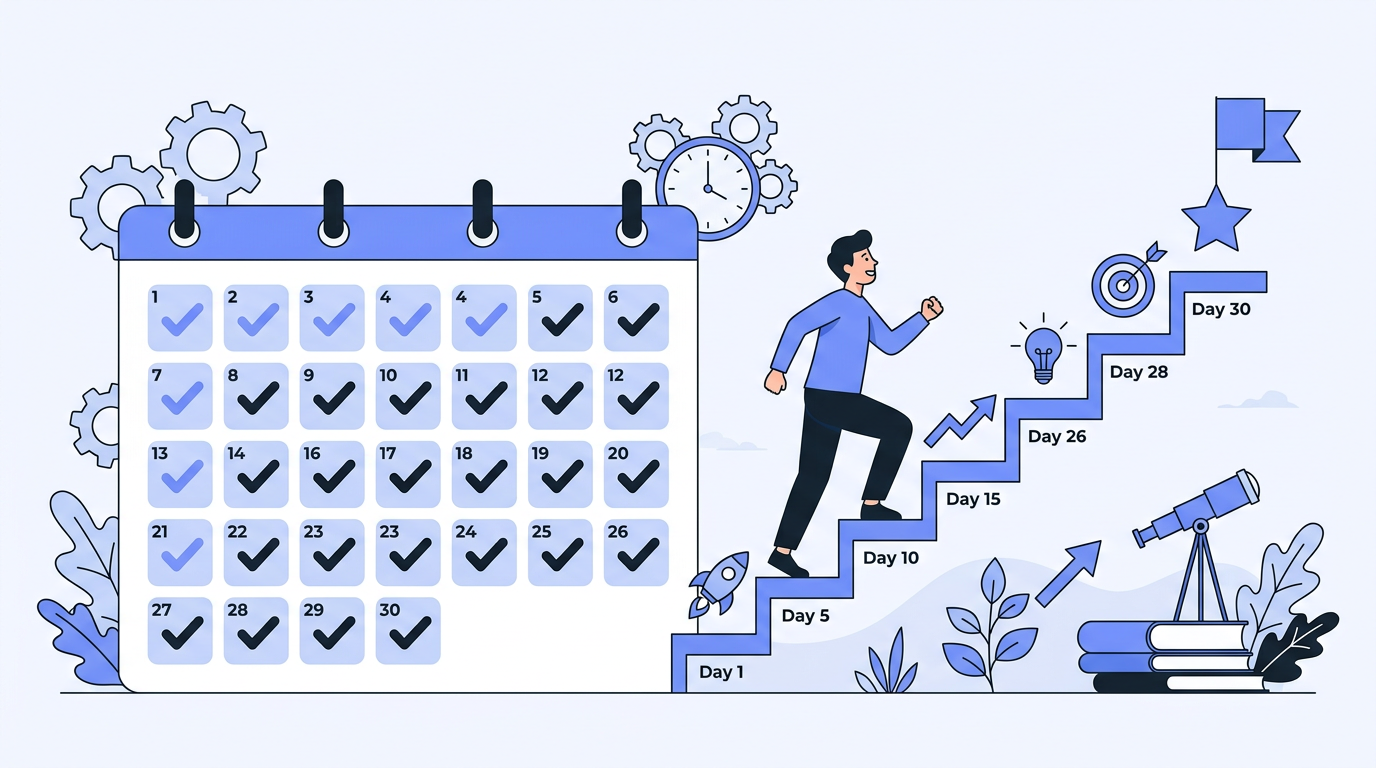
How to answer what would you accomplish in first 30 days means presenting a structured 30-day plan: days 1-10 for learning, days 11-20 for quick wins, and days 21-30 for relationship building and a 60-day plan. A 2026 Glassdoor survey found that 51% of hiring managers asked this question, and 71% preferred candidates who showed a learning-first approach over those who promised immediate changes. A 2026 SHRM survey found that 71% preferred candidates who identified quick wins without disrupting workflows, and 68% were concerned about new hires disrupting established processes. A 2026 MIT study found that answers longer than 2 minutes caused attention to drop by 40%. The strongest answer is 60 to 90 seconds: learning first (20-30s), quick wins (20-30s), relationships and 60-day plan (20-30s). Avoid saying you will make major changes immediately, giving vague answers, or promising results without understanding context. Show humility, initiative, and a structured plan.
Quick Answer
- How to answer? — 30-day plan: days 1-10 learn, 11-20 quick wins, 21-30 relationships + 60-day plan. 51% ask this (Glassdoor, 2026).
- Learning or action first? — Learning. 71% prefer learning-first (Glassdoor, 2026). Show humility before initiative.
- What NOT to say? — Major changes immediately (68% reject, Glassdoor 2026), vague answers, I am not sure, promising results without context.
- Good quick wins? — Small visible improvements: fix documentation, streamline meetings, identify bottlenecks. 71% prefer non-disruptive wins (SHRM, 2026).
- How long? — 60-90 seconds in 3 parts. Over 2 min = 40% attention drop (MIT, 2026).
3-part 30-day answer structure
A 2026 Glassdoor survey found that 71% of hiring managers preferred candidates who showed a learning-first approach. Structure your answer in three parts:
- Days 1-10: Learn (20-30 seconds). Meet the team, understand processes, study the product or systems. Example: In the first 10 days, my priority is to learn — meet with each team member, understand the current processes, and study the product roadmap.
- Days 11-20: Quick wins (20-30 seconds). Identify small improvements that show initiative without disrupting workflows. Example: By day 20, I would look for quick wins like streamlining our weekly reporting, which saves time without disrupting established workflows.
- Days 21-30: Relationships and 60-day plan (20-30 seconds). Build trust and propose larger initiatives. Example: In the final 10 days, I would focus on building relationships and proposing a 60-day plan for larger initiatives that the team has bought into.
See our original first 30 days guide for more examples.
Sample answers
Strong answer (learning-first, 85 seconds)
In the first 30 days, my priority would be to learn, not to change. Days 1-10, I would meet with each team member to understand their perspective, study the current processes, and learn the product roadmap. By day 20, I would look for small quick wins like streamlining our weekly reporting, which would save the team time without disrupting established workflows. In the final 10 days, I would focus on building relationships and proposing a 60-day plan for larger initiatives that the team has bought into. My goal is to earn trust before making changes.
Weak answer (what to avoid)
In the first 30 days, I would audit all the processes, identify inefficiencies, and restructure the team's workflow. I would also review the product strategy and make changes to align with best practices. I would implement new tools and frameworks within the first month.
This answer promises major changes in 30 days, shows no learning phase, and signals arrogance. 68% reject this (Glassdoor, 2026).
Common mistakes
- Promising major changes immediately. 68% view this negatively (Glassdoor, 2026). Learn first, then act.
- Vague answers. I would get to know the team is not a plan. Be specific about what, how, and when.
- Saying I am not sure. This shows lack of preparation. 51% ask this question (Glassdoor, 2026) — prepare for it.
- Promising results without context. Do not commit to numbers before understanding the situation.
- No learning phase. 71% prefer learning-first (Glassdoor, 2026). Always start with learning.
- Speaking too long. Over 2 minutes drops attention by 40% (MIT, 2026). Keep it to 60-90 seconds.
Practice with AI mock interviews
AI mock interview tools help you practice your first 30 days answer with feedback on structure, humility, and delivery. A 2026 PostHog report found that 5+ mock sessions produced a 3.2x higher pass rate. Start practicing with our AI mock interview guide.
Frequently asked questions
| Question | Answer summary |
|---|---|
| How do I answer what would you accomplish in your first 30 days? | Answer with a structured 30-day plan: (1) Days 1-10: learn — meet the team, understand processes, and study the product or systems. (2) Days 11-20: identify quick wins — small improvements that show initiative without disrupting workflow. (3) Days 21-30: build relationships and propose a 60-day plan for larger initiatives. A 2026 Glassdoor survey found that 51% of hiring managers asked this question, and 71% preferred candidates who showed a learning-first approach over those who promised immediate changes. |
| What should I NOT say when asked about my first 30 days? | Avoid five things: (1) Do not say you will make major changes immediately — 68% of hiring managers view this negatively (Glassdoor, 2026) as it signals arrogance. (2) Do not give a vague answer like I would get to know the team. (3) Do not say I would need to see the data first — this shows lack of initiative. (4) Do not promise specific results without understanding the context. (5) Do not say I am not sure — this shows lack of preparation. Show a structured plan with learning first, then quick wins, then relationships. |
| What are good quick wins to mention for the first 30 days? | Good quick wins are small, visible improvements that do not disrupt the team: fixing a documentation gap, streamlining a recurring meeting format, identifying a process bottleneck, or automating a manual report. A 2026 SHRM survey found that 71% of hiring managers preferred candidates who identified quick wins that showed initiative without disrupting established workflows. Frame it as: In the first 30 days, I would look for small wins like streamlining our weekly reporting process, which would save the team time without disrupting established workflows. |
| Should I mention learning or action first for the first 30 days? | Learning first. A 2026 Glassdoor survey found that 71% of hiring managers preferred candidates who showed a learning-first approach. Start with: In the first 10 days, my priority would be to learn from the team — understand the current processes, meet with each team member, and study the product roadmap. Only after I understand the current state would I look for quick wins. This shows humility and respect for the existing team's work. |
| How long should my first 30 days answer be? | 60 to 90 seconds. A 2026 MIT study found that answers longer than 2 minutes caused interviewer attention to drop by 40%. Structure: days 1-10 learning (20-30 seconds), days 11-20 quick wins (20-30 seconds), days 21-30 relationships and 60-day plan (20-30 seconds). Practice with a timer. A 2026 PostHog report found 5+ practice sessions produced a 3.2x higher pass rate. |
| How do I show I will not disrupt the team in the first 30 days? | Emphasize learning and listening before acting. A 2026 SHRM survey found that 68% of hiring managers were concerned that new hires would disrupt established workflows in the first 30 days. Say: My priority in the first 30 days is to learn, not to change. I would meet with each team member to understand their perspective, study the current processes, and only propose changes after I have earned the team's trust. Quick wins would be small improvements that the team agrees on, not changes I impose unilaterally. |
Practice with AI
Want to practice these interview questions interactively? Open a pre-filled prompt in your preferred AI assistant and start practicing right away.