Interview guide
Caregiver interview questions and answers: a practical prep guide
Use these question patterns and answer structures to prepare for caregiver interviews. Includes 18+ sample answers with STAR-method examples for compassion, safety, patience, personal care, and emotional resilience.
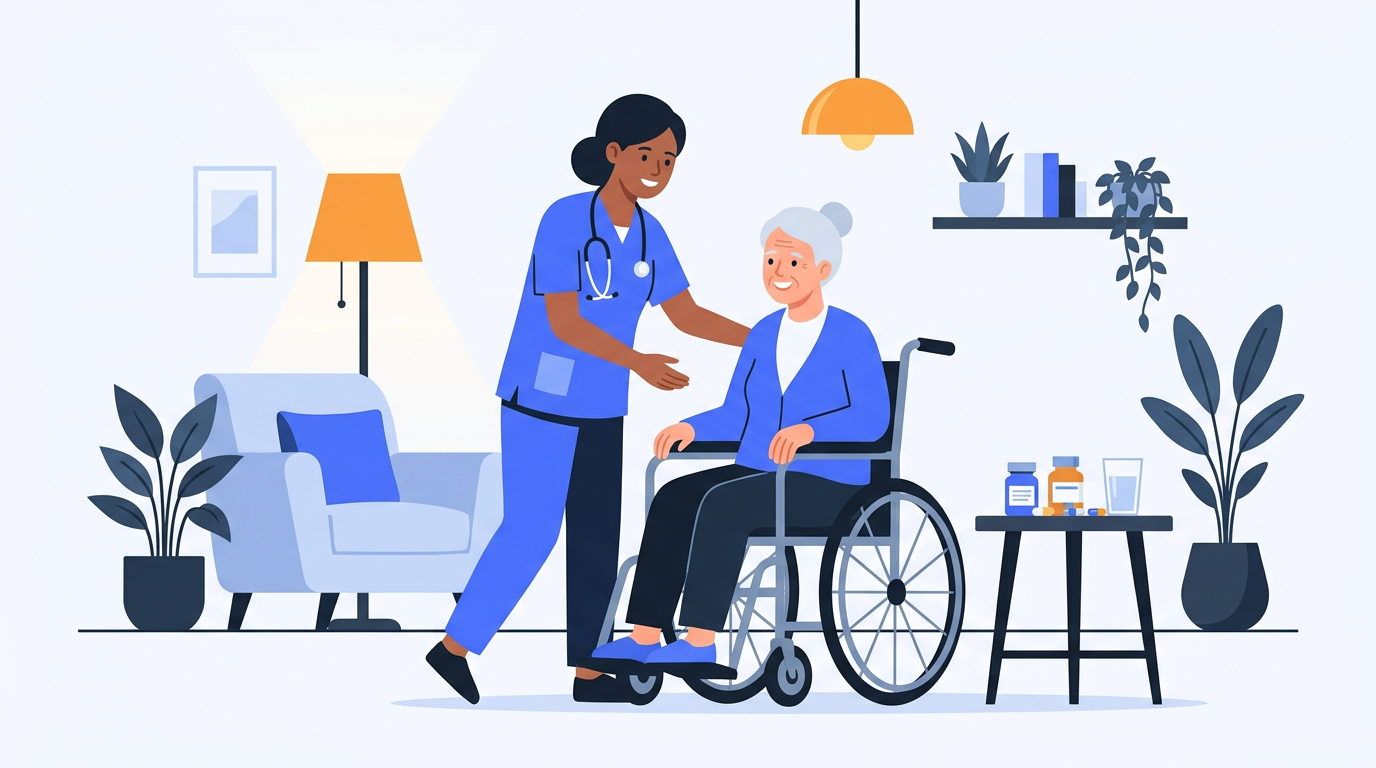
What caregiver interview panels evaluate
Caregiver interviews test your compassion, your safety awareness, and your emotional resilience. The panel is evaluating whether you will treat clients with dignity, follow safety protocols, and sustain the emotional demands of care work without burning out. They are also checking for patience — the single most important quality in a caregiver. Every answer reveals your empathy, your practical judgment, and your understanding that caregiving is about the person, not just the tasks.
Most caregiver interviews include a conversation with 5-8 questions, sometimes a practical demonstration of care skills, and a discussion about your availability and experience. The interview is often conversational and warm, but the panel is listening for safety, dignity, and emotional maturity. Being genuine matters more than rehearsed perfection — the best caregivers are natural, not scripted.
Common questions and answer frameworks
Below are eighteen of the most frequently asked caregiver interview questions, each with a framework and a sample answer. Adapt the examples to your own experience. For caregiver roles, compassion, patience, and safety awareness are what set candidates apart.
Why do you want to be a caregiver?
Connect to genuine motivation. 'I want to be a caregiver because I believe everyone deserves to be treated with dignity, especially when they are vulnerable. When my mother was recovering from surgery, the caregiver who helped her was patient, kind, and competent — and it made a terrifying time manageable for our family. I want to provide that same peace of mind to others. I also know this work is demanding, and I am not looking for an easy job. I am looking for one where I can make a real difference in someone daily life.'
How do you handle a client who refuses help?
Show respect for autonomy. 'I respect their right to refuse — it is their home and their body. I try to understand why — are they in pain, embarrassed, or feeling a loss of control? I explain the benefit of the care gently and offer alternatives. If they refuse a bath, I offer a warm washcloth for their face and hands. I never force care or make them feel guilty. I document the refusal and inform the family or supervisor. I try again later — often mood and willingness change throughout the day.'
Tell me about a time you showed patience in a difficult situation.
Use STAR. Situation: A client with dementia became agitated every evening — a common symptom called sundowning. Task: I needed to help them with evening care without escalating their distress. Action: I learned their patterns — they calmed with soft music and dimmed lights. I started arriving 15 minutes early to set the environment before beginning care. I spoke softly, moved slowly, and never rushed them. I also kept a familiar photo nearby to help with orientation. Result: The evening agitation decreased significantly over two weeks, and care routines became smoother. I learned that patience is not just waiting — it is creating conditions where waiting is easier.'
How do you maintain a client dignity during personal care?
Show specific practices. 'I always knock and wait before entering their room, even in their own home. I explain what I am going to do before I do it. I keep them covered with a towel, exposing only the area I am working on. I close doors and curtains for privacy. I talk to them during care — about their day, their interests — so it feels like a conversation, not a procedure. I never rush personal care or make them feel like a burden. Dignity is in the small details: how you greet, how you touch, how you say goodbye.'
What would you do if a client fell?
Show safety protocol. 'I would not try to move them immediately — moving someone who has fallen can cause more injury. I would check if they are conscious and responsive, ask where they feel pain, and assess for obvious injuries. If they are not responsive or are in severe pain, I would call 911 immediately. If they seem unhurt, I would help them slowly stand using proper technique and check for dizziness. I would document the fall, notify the family and supervisor, and monitor for delayed symptoms over the next 24 hours. Fall response is about safety first, documentation second, and prevention always.'
How do you handle the emotional demands of caregiving?
Show self-awareness and sustainability. 'Caregiving is emotionally demanding, and I take that seriously. I debrief with my supervisor after difficult situations — a client passing, a family conflict, a particularly hard day. I maintain boundaries — I care deeply but I do not carry the work home with me every night. I have my own support system — family, friends, and a hobby that helps me decompress. I also recognize signs of burnout — irritability, detachment, exhaustion — and I ask for help when I see them. The best caregivers are not the ones who sacrifice themselves — they are the ones who sustain themselves so they can keep giving.'
What is your experience with medication reminders?
Be specific about process. 'I have provided medication reminders for 3 years. I follow the medication schedule exactly as prescribed — right medication, right time, right dose. I never administer medication — I remind and observe. I document each reminder and whether the client took the medication. I watch for side effects and report them to the family or nurse. I also organize pill boxes weekly to reduce errors. If a client refuses medication, I document it and notify the family. Medication safety is about consistency and documentation — one missed dose or double dose can be dangerous.'
How do you communicate with a client family?
Show clear communication practices. 'I provide a daily update — what we did, how the client felt, any changes in mood or condition, and anything the family should know. I communicate concerns early, not after they become problems. I am honest but gentle — I do not alarm families, but I do not hide issues either. I also listen to the family — they know the client better than I do, and their input helps me provide better care. I maintain professional boundaries — I am friendly but not the family friend. Clear, consistent communication builds trust with families who are trusting me with their loved one.'
Describe a time you had to adapt your care approach for a specific client.
Use STAR. Situation: A client who was hard of hearing would miss medication reminders and become frustrated. Task: I needed to adapt my communication. Action: I started writing reminders on a whiteboard in their room with the time and medication name. I also stood directly in front of them when speaking so they could read my lips. I used gentle touch on the arm to get their attention before speaking. Result: Medication adherence improved to 100 percent, and the client felt respected because I adapted to their needs rather than repeating myself louder. I learned that care is not one-size-fits-all — it is tailored to each person.'
How do you handle a client with dementia or Alzheimer's?
Show specific techniques. 'I use patience and validation, not correction. If they ask for their deceased spouse, I do not say they passed away — I ask them to tell me about them. I maintain a calm environment — familiar routines, photos, and objects. I redirect agitation with activities they enjoy — folding laundry, looking at magazines, or listening to music. I never argue with their reality — their brain is telling them something different, and arguing only causes distress. I also keep them safe — securing doors, removing hazards, and monitoring wandering. Dementia care is about entering their world, not pulling them into ours.'
What would you do if you noticed a change in a client condition?
Show observation and escalation. 'I would note the specific change — what I observed, when it started, and how it differs from their normal state. I would check vital signs if I am trained to do so. I would notify the family and the supervisor immediately with specific observations. I would document the change in the care log. I would continue to monitor and provide comfort. Early detection of changes — a new confusion, a loss of appetite, a change in mobility — can prevent hospitalizations. My role is to be the eyes and ears for the family and the healthcare team.'
How do you handle working alone in a client home?
Show safety and professionalism. 'I follow the care plan and maintain regular check-ins with my supervisor. I keep my phone charged and let someone know my schedule. I respect the client home — I do not watch TV, use their computer, or invite anyone over. I keep the environment clean and organized. I also trust my instincts — if something feels unsafe, I leave and call my supervisor. Working alone requires self-discipline and professional boundaries. The client is trusting me in their most personal space, and I honor that trust.'
Tell me about a time you had a conflict with a family member.
Use STAR. Situation: A family member wanted me to do tasks outside my scope, like adjusting medication doses. Task: I needed to set boundaries without alienating the family. Action: I explained that I am not authorized to adjust medication — only to remind. I suggested they speak with the nurse or doctor about the change. I documented the request and informed my supervisor. I remained respectful and focused on what I could do. Result: The family understood the boundary and spoke with the doctor, who made the adjustment. I learned that boundaries protect the client and the caregiver.'
How do you handle meal preparation for a client with dietary restrictions?
Show attention to detail. 'I follow the meal plan provided by the family or dietitian exactly. I check for allergies and restrictions before preparing anything. I keep ingredients separate to avoid cross-contamination. I document what the client eats and how much — appetite changes can signal health issues. I also make meals appetizing — even with restrictions, food should be enjoyable. If the client refuses meals, I offer alternatives and notify the family. Nutrition is care — it affects energy, recovery, and mood.'
What would you do if a client was verbally abusive?
Show de-escalation and understanding. 'I do not take it personally — verbal abuse often comes from pain, fear, or confusion, not from the person. I stay calm, lower my voice, and give them space. I try to identify the cause — are they in pain, hungry, or scared? I redirect gently and wait for them to calm down. If the abuse is persistent and I feel unsafe, I leave the room, ensure the client is safe, and call my supervisor. I never argue back or respond with anger — that escalates. I document the episode. Self-protection is not selfish — it is professional.'
How do you handle the physical demands of caregiving?
Show awareness and technique. 'I use proper body mechanics — bending at the knees, not the back, and using my legs to lift. I use transfer belts and slide boards for clients who need help moving. I never lift alone if the client is too heavy — I ask for help or use equipment. I wear supportive shoes and take my breaks. I also stay physically fit — stretching, walking, and strength exercises help me handle the demands. Caregiving is physical work, and looking after my own body is part of looking after my clients.'
Describe a time you advocated for a client.
Use STAR. Situation: I noticed a client was not eating and was losing weight, but the family had not noticed because they visited briefly. Task: I needed to raise the concern without alarming the family. Action: I documented the food intake over a week, noted the weight loss, and presented the data to the family with a recommendation to consult the doctor. I also suggested smaller, more frequent meals and a nutritional supplement. Result: The doctor identified a medication side effect causing nausea, adjusted the prescription, and the client appetite returned. I learned that advocacy is about data — observations presented with recommendations lead to action.'
Why should we hire you for this caregiver role?
Connect your experience to their needs. Example: 'You should hire me because I combine practical care skills with genuine compassion. I have 3 years of caregiving experience, including dementia care, post-surgery recovery, and end-of-life support. I have never had a safety incident, I have a 100 percent medication reminder adherence rate, and I have received 4 family commendations. I do not just complete tasks — I see the person behind the care plan, and I treat every day as an opportunity to make their life a little better.'
The STAR method for caregiver behavioral questions
For behavioral questions, use the STAR method. In caregiver interviews, your stories must show both practical skill and genuine compassion:
- Situation — What was the care scenario and who was the client?
- Task — What was your responsibility?
- Action — What did you do? Describe the care action and the dignity you preserved.
- Result — What happened? Quantify it: client comfort improved, family feedback, safety maintained, condition change reported.
Keep each STAR answer under 90 seconds. In caregiving, conciseness matters — clear communication with families and supervisors is a core skill, and it starts in the interview.
Common mistakes to avoid
- Saying you love helping people without evidence — Every caregiver says this. Back it with a specific story.
- Not knowing safety protocols — Falls, lifting, medication, infection. Safety is the most tested topic.
- Saying you would force care on a refusing client — Autonomy is a right. Always respect refusal.
- Not addressing emotional demands — Pretending care work does not affect you emotionally shows naivety, not strength.
- Not asking about the client and training — If you do not ask about who you will care for, you signal you see this as just a job.
Step-by-step interview preparation method
Research the care setting
Understand whether the role is in-home care, assisted living, or a care facility. Know the client demographic — elderly, dementia, post-surgery, disability. Check if they require specific certifications (CNA, First Aid, CPR).
Prepare your care stories
Have 5-7 STAR stories: a time you showed patience, a safety issue you handled, a client you advocated for, a family communication challenge, a dementia care moment, and a time you maintained dignity under pressure.
Review safety fundamentals
Know fall prevention, proper lifting and transfer techniques, infection control, medication safety, and emergency response. Safety is the most tested topic in caregiver interviews.
Practice 15 key questions aloud
Use the questions in this guide. Record yourself and listen for compassion, patience, and professionalism. Practice with an AI interview tool for feedback.
Be ready for a scenario question
Caregiver interviews often include scenarios: a client falls, a client refuses care, a family conflict. Be ready to walk through your response step by step, prioritizing safety and dignity.
Prepare questions about the role and clients
Ask about the client needs, the care schedule, the team support, the training provided, and what success looks like in the first 30 days. These show you understand caregiving is about the person, not just the tasks.
Questions to ask the interview panel
- What are the specific needs of the client I would be caring for?
- What is the care schedule and what does a typical shift look like?
- What training and support does the agency provide?
- How does the team communicate about client changes?
- What does success look like in the first 30 days?
- What support is available for caregiver well-being?
After the interview: follow-up and reflection
Within 24 hours, send a brief thank-you email. Reference a specific topic from the interview — a client scenario they described, a care challenge they mentioned, or something about their mission that resonated. In caregiving, this follow-up demonstrates the communication and professionalism the role requires.
If you do not get the job, ask for feedback. Caregiver hiring decisions often come down to compassion signals and safety awareness. The feedback tells you what to emphasize in your next interview.
Practice with AI
Caregiver interview preparation is most effective when you practice aloud, especially the care scenario questions. Read the job description, identify the client type, and rehearse your stories. Record yourself and listen for compassion, patience, and safety awareness. Uhired AI can generate caregiver-specific interview questions from your resume and the job description, simulate a care scenario, and help you refine your answers until they demonstrate the empathy and judgment that define excellent care.
Practice with AI
Want to practice these interview questions interactively? Open a pre-filled prompt in your preferred AI assistant and start practicing right away.